In today’s business world, being successful is no longer just about the year-end profit. Investors, global clients, and even the Indian government are now looking at a different set of numbers: your carbon footprint and your ESG score.
With India committing to a Net Zero target by 2070, the pressure is on for companies to clean up their operations. Whether you are a large manufacturer or a growing mid-sized business, going green is moving from a choice to a mandatory requirement. But for many leaders, terms like ESG and Net Zero feel like complex jargon that is hard to implement.
The truth is, the most effective and simple way to start this journey is to adopt Solar Energy. It is not just a research experiment anymore, but it is a proven financial and strategic tool that helps you cut costs while meeting global sustainability standards.
In this blog, we will break down how solar power helps your business tick all the right boxes for ESG, protects you from future carbon taxes, and puts you on a clear path to Net Zero, without complicating your operations.
What is ESG and Why Does It Matter for Corporations?
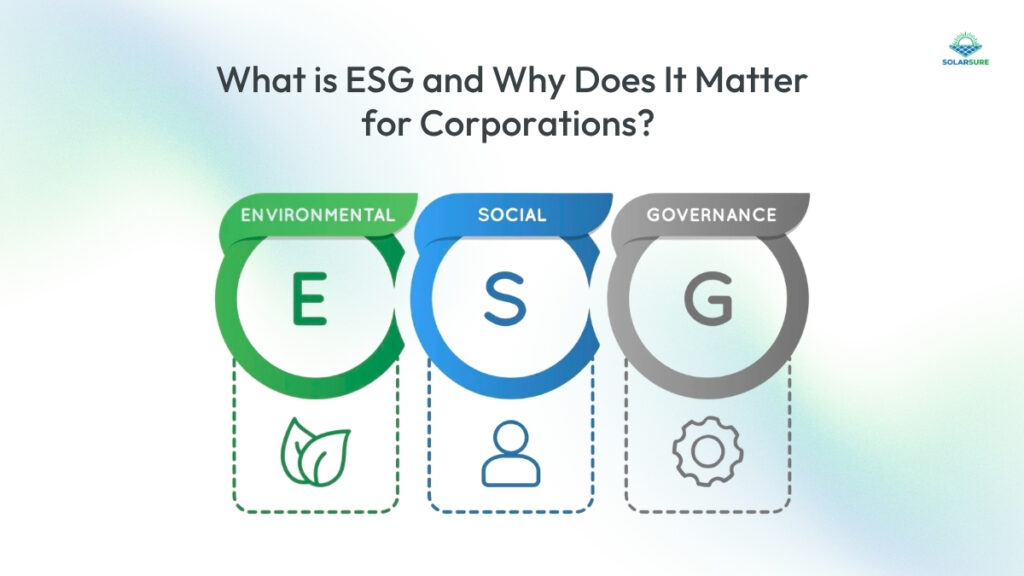
ESG stands for Environmental, Social, and Governance. It is a framework used to measure how responsible a company is. Investors use ESG scores to decide where to put their money. High ESG scores attract better investors and lower financing costs. Poor ESG performance can lead to regulatory penalties. It can also significantly damage your brand reputation.
What is an ESG Score and Why Does It Matter for Your Business?
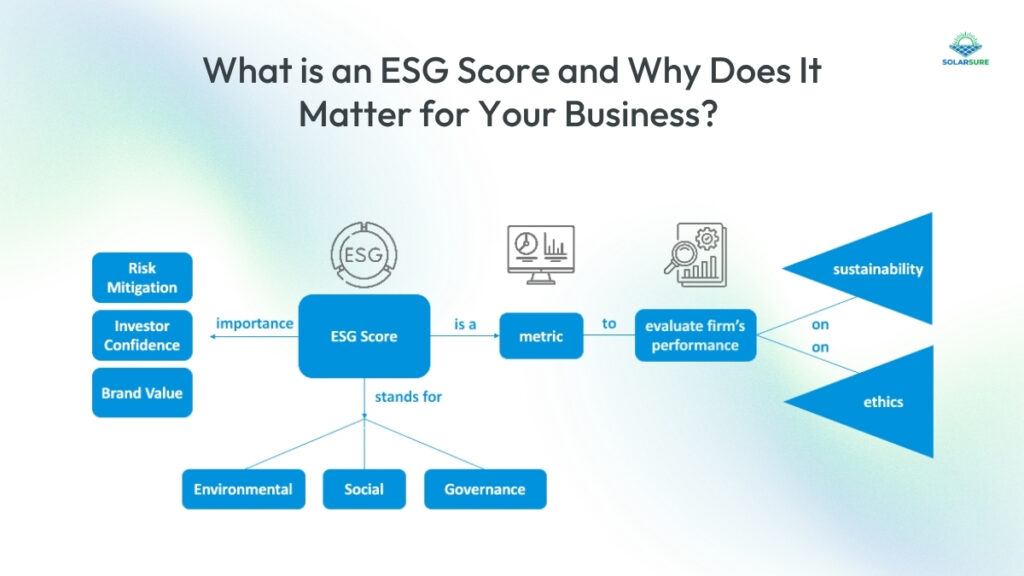
An ESG score is a numerical rating that measures a company’s sustainability performance. It is calculated by rating agencies like MSCI, Sustainalytics, and CRISIL in India. The score evaluates how well a company manages environmental risks, social responsibilities, and governance practices. A higher ESG score signals that the business is well-managed, ethical, and future-ready. Banks use ESG scores to decide loan eligibility and interest rates. Global clients and supply chain partners use them to choose who they work with. Stock exchanges and regulators in India are increasingly making ESG disclosures mandatory.
How Solar Helps Corporations Improve ESG Score?
Solar reduces Scope 2 carbon emissions with measurable, reportable data. It creates green jobs and supports the well-being of nearby communities. Also, it provides verified, real-time data for transparent ESG reporting. It lowers energy costs and protects against fuel price volatility. In addition, it qualifies your company for green financing and premium investor interest. Overall, it future-proofs your business against carbon taxes and trade barriers.
What Does “E” Mean in ESG?
Environmental Responsibility means reducing the harm your business causes to the planet. It covers how much carbon you emit, how much water you consume, and how much pollution you create. Every company today is expected to measure and minimise its environmental impact. Regulators, investors, and global clients are all watching this closely. A company that cannot prove its environmental efforts risks losing contracts, funding, and trust.
The environmental pillar is the most urgent priority today. Corporations must reduce their carbon footprint to stay competitive. Solar power is the most direct way to cut Scope 2 emissions.
How Solar Eliminates Air and Water Pollution?
Solar produces absolutely zero air pollution during its entire operation. It uses almost no water, unlike coal or gas-based power plants. This makes solar ideal for water-intensive sectors like textiles, food processing, and pharma.
How Solar Aligns You with Global Green Commitments?
Companies using solar can formally align with SBTi and the Paris Agreement. These are globally respected sustainability commitments that strengthen your brand. They also signal seriousness to international clients and ESG-focused investors.
What Does “S” Mean in ESG?
Here, S refers to Social Impact. It means taking responsibility for the well-being of people around your business. It includes your employees, the local communities near your operations, the needy, and society at large. Companies are expected to create positive social value, instead of just profit.
This means a business must generate good jobs, improve health outcomes, and support underserved communities for the betterment of society. A strong social score tells the world that your business is a force for good.
How Solar Creates Jobs in Local Communities?
Large solar projects generate green jobs in engineering, construction, manufacturing, and maintenance. Most of these jobs are created close to the installation site, benefiting local communities. This directly contributes to regional economic growth and employment.
How Solar Improves Health and Community Well-being?
Reduced fossil fuel use means cleaner air for surrounding communities. Better air quality leads to measurable improvements in public health outcomes. Solar projects in rural areas also bring reliable electricity to underserved populations.
What Does “G” Mean in ESG?
Governance means how honestly and responsibly your company is managed and run. It covers regulatory compliance, accurate reporting, risk management, and ethical decision-making. In the context of sustainability, governance asks a simple question: Can you prove what you claim?
Greenwashing, which means making false or exaggerated environmental claims, is now a serious legal and reputational risk for businesses. Regulators in India and globally are cracking down on unverified green claims.
How Solar Gives Businesses Real-Time, Verifiable ESG Data?
Modern solar systems come with smart monitoring platforms built in. They provide real-time data on kilowatt-hours generated and CO₂ saved daily. This data simplifies compliance with GRI, SASB, CDP, and India’s BRSR framework.
How Solar Supports Green Certifications and Energy Certificates?
Solar data integrates smoothly with Renewable Energy Certificate systems like I-REC. These certificates allow companies to make verified, legally defensible green energy claims. Solar adoption also helps your facilities earn LEED, GRIHA, BEE Star Label and IGBC Green Building ratings.
How Solar Protects Businesses from Carbon Taxes and Trade Barriers?
The EU’s Carbon Border Adjustment Mechanism (CBAM) taxes carbon-intensive exports. Companies without a clean energy plan will face serious financial penalties soon. Solar adoption today is your shield against tomorrow’s regulatory costs and helps generate carbon credit benefits.
What are Net Zero Targets?
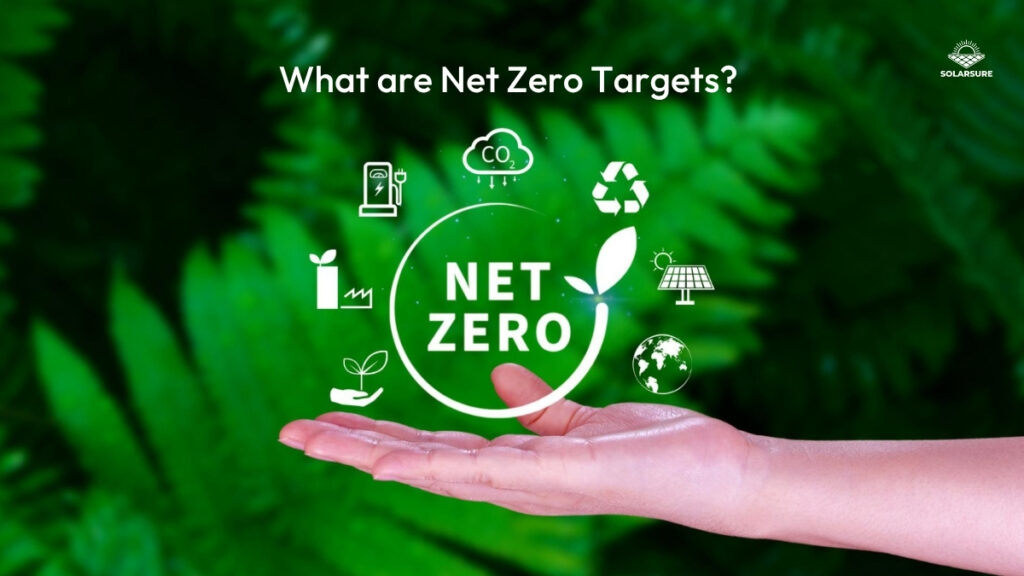
Net zero means balancing the greenhouse gases businesses emit with those they remove. Solar directly reduces their total emissions from electricity consumption.
How Solar and Battery Storage Collectively Complete Your Net Zero Plan?
A business can pair solar with battery storage to cover nights and cloudy days reliably. Battery systems also eliminate the need for diesel generators during power cuts. This improves energy security and reduces operational risk for businesses. Companies that adopt solar early gain a measurable head start on net zero targets. They can report progress confidently to stakeholders and government bodies.
Conclusion
India’s corporate sector is at a turning point. Businesses that act now will lead, and those that wait will struggle. Solar energy is no longer just an environmental choice. It is a financial, strategic, and reputational advantage for businesses. Whether you are a large manufacturer or a growing mid-size company, solar works for you. You can start with a rooftop system or explore open access solar for larger needs. For more information, book a free consultation with our trusted solar developer about a PPA or RESCO model today.