In most industries, electricity is not just another utility bill. It is directly tied to production, storage, and service delivery. A machine stops when the power stops. A cold storage loses inventory when the voltage fluctuates. A hospital cannot afford even a short interruption. Yet the reality across India is that power cost keeps rising while reliability still varies from location to location.
Because of this, companies have started treating energy the same way they treat raw material procurement or logistics planning. Instead of depending entirely on the grid, businesses are actively choosing structured energy solutions that give control over cost and supply. Solar EPC solutions emerged from this need.
Solar EPC means Engineering, Procurement, and Construction. It is not a product purchase. It is a managed energy project. An EPC partner studies how your facility consumes power, designs an appropriate system, procures equipment, installs it, integrates it with your electrical network, manages approvals, and supports the system for years after commissioning. The objective is stable electricity without any dependency on the grid.
Solar addresses this issue at a structural level. Instead of purchasing all electricity from the grid at variable prices, a business begins producing a predictable portion of its own power at a fixed lifetime cost. The mechanism that makes this possible is the Solar EPC model.
For commercial and industrial sectors in India, Solar EPC solutions today are offered in three major categories. Financial structuring, implementation services, and technical configurations. So, let’s understand the solar EPC solutions that help commercial and industrial sectors in building a strong and efficient solar system.
Why are Commercial and Industrial Businesses in India Adopting Solar Energy Solutions?
Commercial and industrial consumers pay some of the highest electricity tariffs in the country. The power cost often affects product pricing, storage cost, operational cost, and planning. Even a small tariff revision impacts margins. Here, solar power addresses three operational problems at the same time.
First, it stabilises electricity costs. Once the plant is installed, the cost of generation remains almost constant for years.
Second, it reduces dependency on grid supply. During daytime operations, the facility draws less electricity from the distribution company.
Third, it improves financial predictability. Instead of estimating future tariff hikes, companies know a fixed portion of their energy cost in advance.
For industries that operate during the daytime, solar power directly replaces purchased electricity rather than exporting it. This is why factories, warehouses, food processing units, institutions, and other SMEs are adopting solar faster than any other segment.
What are the Solar EPC Business Models Available for Industries in India?
Solar adoption in the commercial and industrial sector is strongly influenced by finance. Businesses have different priorities. Some want maximum long term savings, while others want immediate cost reduction without investment. Because of this, EPC providers deliver solar through specific financial structures.
There are two types of financial models preferred for adopting solar. These are CAPEX and OPEX. So, let’s understand these models first.
CAPEX Model Solution
In the CAPEX model, you purchase the entire solar plant and become the owner. The company pays the project cost either from internal funds or through financing. After commissioning, the electricity produced directly replaces grid consumption.
This model provides the highest lifetime savings because the business keeps the full economic benefit of the generated power. Payback commonly occurs within a few years, depending on tariff and consumption pattern. Companies can also claim accelerated depreciation benefits, which improve project returns in the early years.
From an operational perspective, the business gains a fixed energy source for more than twenty years. After the payback period, electricity produced by the system becomes nearly free except for routine maintenance.
OPEX Model Solution
The OPEX model is designed for organisations that want savings without capital expenditure. Here, a developer or investor installs and owns the solar plant on the company’s rooftop. The business signs a long term power purchase agreement and pays only for the electricity generated.
The tariff is lower than the utility rate, which reduces monthly expenses immediately. The developer manages maintenance and performance risk. For the consumer, there is no upfront cost and no operational responsibility.
Hospitals, schools, commercial complexes, leased factories, and other institutions often prefer this model because working capital remains available for core activities.
Open Access and Group Captive Solutions
Some businesses do not have sufficient rooftop space to meet their power demand. In such cases, EPC providers arrange off-site solar generation.
Through open access or group captive arrangements, electricity is produced at a remote solar plant and transmitted to the facility through the grid. The company effectively consumes solar power without installing panels on its own building. Large manufacturing units and multi-location companies often adopt this approach to achieve deeper cost reduction.
What Services Does a Solar EPC Company Provide?
Many businesses initially think solar installation is a straightforward civil job. In reality, the complexity lies in planning rather than mounting panels. So, here are some services an EPC offers:
Engineering and Project Planning
Every successful solar project begins long before any material reaches the site. The EPC team first studies how the facility actually consumes electricity. Engineers analyse past electricity bills, contract demand, production timing, and peak usage hours. This determines the correct system size requirement. An oversized system may face export limitations, while an undersized system fails to deliver expected savings.
The building’s electrical distribution is also reviewed. The Solar EPC team identifies the main LT or HT panel where solar power will be integrated and checks transformer capacity to ensure safe synchronisation.
Later, the team performs the structural evaluation. They ensure the roof or ground structure can safely carry the solar mounting system for more than two decades. This includes load calculations, wind load resistance, soil testing, surface analysis, and layout planning. Engineers also design earthing networks, lightning protection, earth resistance testing, and electrical isolation so that the plant operates safely during faults or storms.
At this stage, shadow analysis is extremely important. Small obstructions such as parapet walls, overhead tanks, trees, electrical lines, or adjacent buildings can permanently reduce generation if not planned correctly. Professional EPC companies simulate seasonal sun movement to avoid these losses before installation begins.
Procurement of Solar Components
After engineering approval, the EPC provider procures all equipment. This stage determines the long term reliability of the project.
High efficiency solar modules are selected based on available space and climate conditions. Many commercial projects now use n-type technologies, such as TOPCon or bifacial modules, because they maintain performance better in high temperatures.
Inverters are selected based on plant capacity and electrical configuration. Industrial grade inverters include multiple tracking channels, safety shutdown features, and remote monitoring capability. Along with major equipment, cables, connectors, junction boxes, and protection devices are carefully specified. These balance-of-system components often decide whether a plant operates efficiently or loses power through electrical resistance and overheating.
Installation and Electrical Integration
Installation is the most visible stage of the project, but it works properly only when earlier planning is accurate.
Mounting structures are first fixed to the roof or ground. For concrete roofs, anchors are used after the waterproofing treatment. For metal industrial sheds, non-penetrating clamps are often installed so that the roofing sheet remains undamaged. Also, correct alignment and tilt angle are essential because panel orientation directly affects generation.
Once structures are ready, modules are mounted and connected through DC cabling. Cables are routed through protective conduits to prevent mechanical damage and exposure to moisture. String connections are carefully tested to avoid reverse polarity or mismatch losses.
Inverters are then installed and connected to the plant’s electrical panel. AC cabling, isolators, surge protection devices, and earthing systems are integrated with the facility’s distribution board. After installation, the EPC team performs insulation resistance tests, continuity tests, and safety verification.
The final step is grid synchronisation. After inspection by the electrical authority and utility company, the system is energised. From this moment, the solar plant begins supplying electricity to the facility and reducing grid consumption.
Commissioning and Performance Verification
Before handover, the EPC partner conducts performance checks. Generation readings are compared with design expectations to ensure performance check, then activate the monitoring software. They provide training to the owner to read the generation data and basic operational parameters.
Modern systems provide online dashboards where daily energy production, savings, and operational status can be viewed remotely. This transparency helps businesses verify that the plant is performing as promised.
Operation and Maintenance
A solar plant operates for approximately 25 years, so maintenance support is a critical part of the EPC solution.
Regular module cleaning prevents dust accumulation, which can reduce output significantly in industrial areas. Electrical connections are inspected periodically to prevent heating or loose contact. Inverters are checked for alarms and firmware updates. Sometimes they perform thermal scanning to detect hidden faults early.
A solar EPC ensures that the remote monitoring platforms continuously compare actual generation with expected performance. If output drops, service teams are alerted, and corrective action can be taken quickly. This ensures that the financial projections calculated at the start of the project remain accurate over time.
What Technical Solar Solutions are Available for Different Industrial or Commercial Requirements?
Rooftop solar in commercial and industrial sectors is no longer limited to placing the solar panels on a flat roof or connecting them to a main panel. Every facility has different operating conditions and requirements. Some face frequent outages, some have limited space issues, some have fragile roofing sheets, and some need power even after sunset. So, the technology recommended by a solar EPC is completely based on the requirements of your business.
Here are the different types of technological solutions offered by a solar EPC company.
Hybrid Systems with Storage
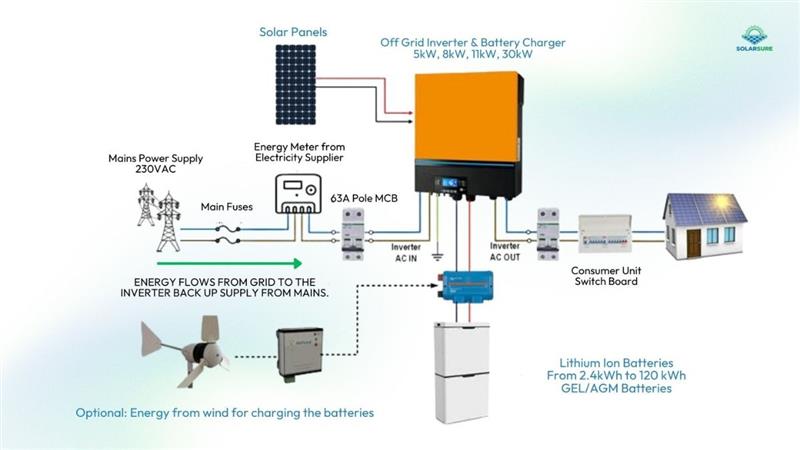
The hybrid setup combines three sources of electricity in one electrical setup. First, the solar panels generate electricity during the day that businesses can use in their operations. The second source is excess energy generated by panels but not used, which is stored in the battery for later use. And the last source is the grid. In case the electricity generated by solar panels is consumed, then businesses can turn to grid electricity to ensure smooth operations.
In this case, the EPC company use a hybrid inverter that manages when power should come from solar, battery, or the grid.
Non-Puncture Mounting Structures
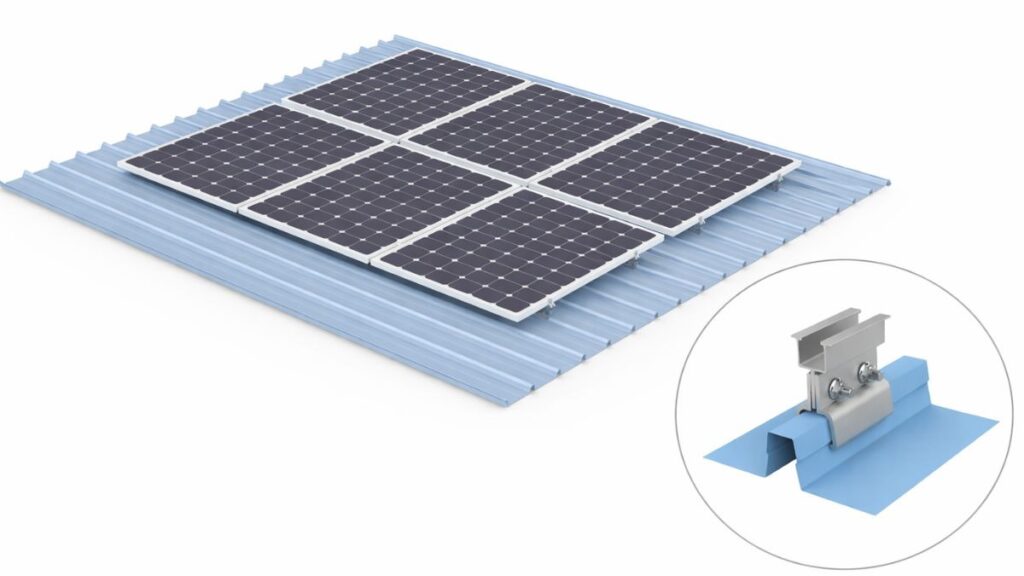
Many industrial sheds use metal sheet roofing. The traditional solar installation requires drilling holes into the surface to ensure a strong structure. So, the drilling on traditional sheets can create some serious concerns for businesses because any penetration leads to leakage or any damae in roof’s life.
Here, a solar EPC offers a non-puncture mounting system. They are specially designed aluminium or galvanised steel clamps that do not require drilling because the clamps grip the sheet ribs effectively.
The mounting clamps hold onto the standing seams or purlins of the metal roof using mechanical compression. The solar structure is fixed onto these clamps and distributed across multiple load points. The load spreads evenly across the structure rather than concentrating on a few drilled bolts.
Vertical and Facade Solar
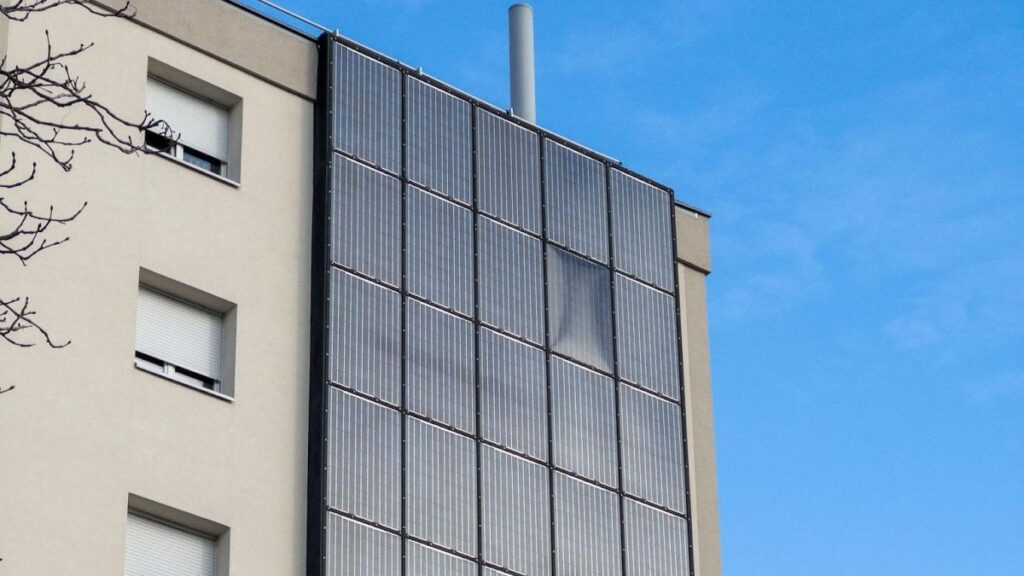
When rooftop space is insufficient or there is no ground space, solar panels can be installed on the sides of buildings or incorporated into building facades. This is sometimes referred to as vertical solar or building-integrated solar.
In this case, the panels are mounted on the outer walls facing east, west, or south, depending on building orientation. While a horizontal rooftop panel produces maximum energy at noon, vertical panels generate electricity in the morning and late afternoon. This actually matches certain commercial load patterns, such as office air-conditioning start-up and evening operations.
Many commercial buildings, such as malls, hospitals, and corporate offices, have high electricity demand but limited roof area due to HVAC equipment and lift rooms. Facade solar allows them to increase solar capacity without structural modification.
Another benefit of vertical and facade solar in urban areas is that roofs are shaded by neighbouring buildings. Vertical installation avoids shading and still contributes meaningful generation. It also reduces wall heat absorption, lowering indoor cooling demand.
Carport Solar System
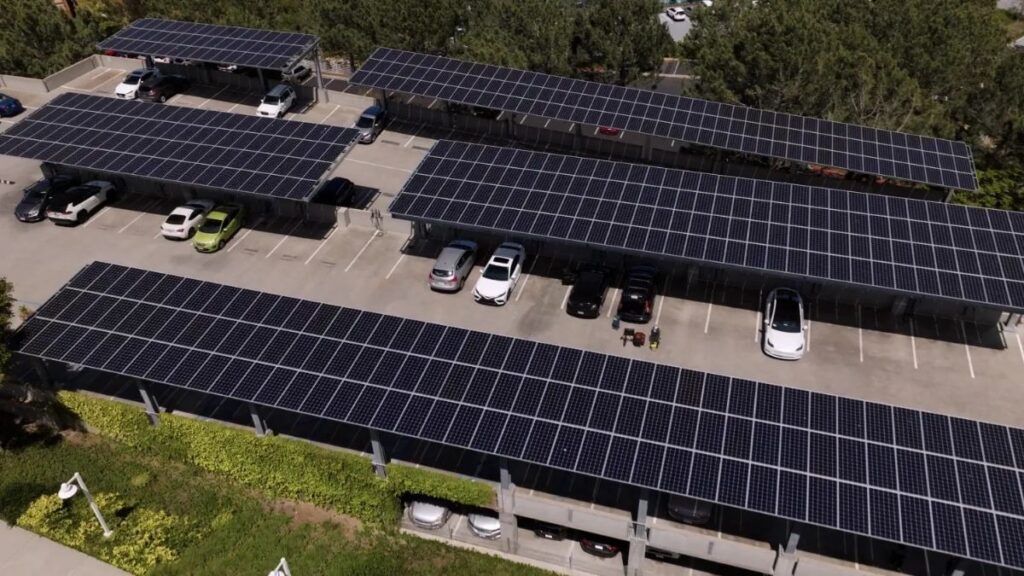
A solar carport is a steel canopy structure installed above parking areas with solar panels mounted on top. Instead of occupying only rooftop space, the parking lot becomes a generation zone.
The module mounting structure is designed with a slight tilt angle to optimise sunlight capture. Vehicles park underneath while the panels generate electricity overhead. The power is connected to the facility’s electrical system just like a rooftop plant.
Commercial campuses, malls, and warehouses often have large open parking spaces but limited roof or ground area. Carports expand solar capacity without altering the building. They also provide shaded parking, which reduces cabin temperature for vehicles and improves customer or employee comfort. Companies planning electric vehicle adoption can later integrate charging stations directly under the same structure using the solar power generated above.
Floating Solar Systems
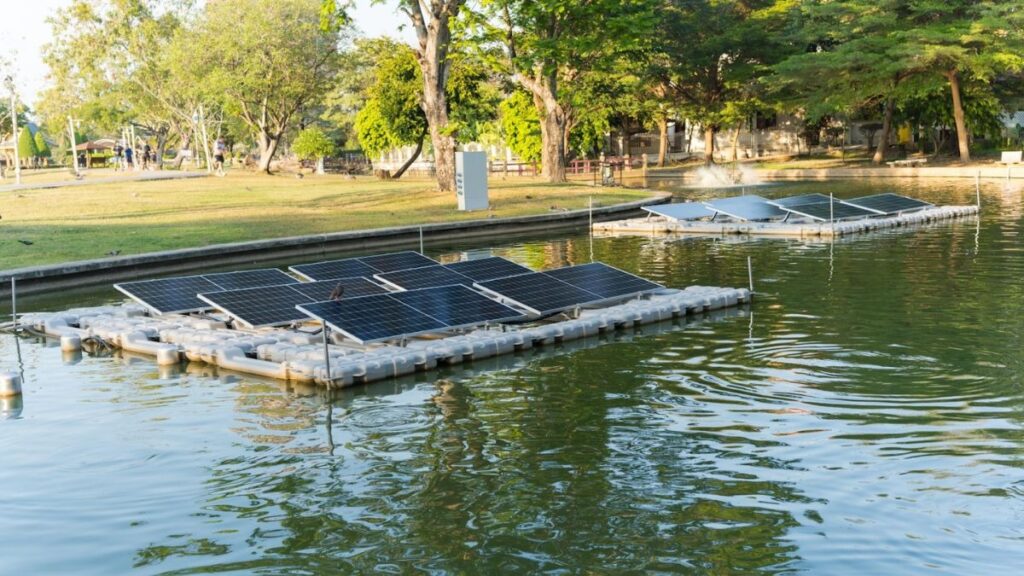
Floating solar is installed on water bodies such as industrial reservoirs, firewater tanks, or wastewater treatment ponds. Panels are mounted on buoyant structures that float on the surface.
The floating platform holds panels at a fixed tilt while being anchored to the pond edges. The electrical cables run through protective conduits to the inverter located on land. Water naturally cools the panels, improving their operating temperature.
Solar panels lose efficiency when they become too hot. Water cooling keeps module temperature lower, which improves generation performance. Facilities such as textile processing units, chemical plants, and large manufacturing campuses often already maintain water reservoirs. Using these surfaces for solar allows them to expand capacity without consuming land or roof area. Another benefit is reduced water evaporation because the panels partially shade the surface.
How Should a Business Choose the Right Solar EPC Partner in India?
Selecting a Solar EPC partner is the most important decision in the entire project. A solar plant is not a short-term installation. It is expected to operate for 20 to 25 years. The company you choose will directly affect your electricity savings, building safety, and system performance for decades.
A good EPC partner reduces your power bills and handles everything smoothly. A poor one may lead to delayed approvals, lower generation, recurring shutdowns, roof leakage, or expensive repairs later. For this reason, businesses should evaluate EPC companies carefully instead of choosing only based on quotation price.
Key Things to Check Before Signing a Solar EPC Contract
Step 1: Check Their Portfolio
Start by reviewing the company’s past installations. Ask for commercial or industrial projects similar to your plant size, such as 50 kW, 100 kW, 2 MW or higher.
If possible, physically visit at least two operating sites. During the visit, observe wiring quality, mounting structures, and inverter installation. Speak with the owner or plant manager and ask simple, practical questions:
- Is the system generating close to what was promised?
- How often does it stop working?
- How quickly does the company respond to service calls?
Real operating plants provide far more reliable information than presentations or brochures.
Step 2: Evaluate the Technical Proposal, Not Only the Price
Many businesses make the mistake of comparing only the cost per kilowatt. A cheaper proposal may simply mean smaller cables, weaker structures, low quality materials, or incorrect design.
A professional EPC should provide:
- Shadow analysis
- Soil Testing (If needed)
- Plant layout drawing
- Expected yearly generation
- Inverter configuration
The most valuable project is not the cheapest project. It is the one that produces the highest energy over 25 years.
Step 3: Check the Quality of Equipment and Warranties
A solar plant mainly depends on three components: panels, inverters, and mounting structures.
Make sure the EPC clearly specifies manufacturers and provides datasheets. Confirm warranty terms in writing:
- Panel performance warranty is around 25 years
- Inverter warranty is typically 5 to 10 years
- Workmanship warranty of at least 1 to 2 years
Also, ask who handles replacement during failures. A reliable EPC manages warranty claims instead of leaving the customer to coordinate with manufacturers.
Step 4: Confirm Maintenance and Monitoring Support
Solar plants require frequent cleaning and inspection to maintain performance. This is especially important in dusty industrial areas.
The contract with a solar EPC should include a defined maintenance plan with cleaning schedules and service response timelines. Good companies offer fault response within 24 to 48 hours.
Remote monitoring is equally important. You should receive a mobile app or web dashboard where you can track daily generation and savings. Without monitoring, a plant may underperform for months without anyone noticing. A solar EPC company also ensure remote monitoring ang provide training to understand how your plant’s generation.
Step 5: Check Their Experience With Local Approvals
In India, a solar system cannot start saving money until net metering and electrical inspection approvals are completed. These procedures vary by state and often cause delays.
So, choose a solar EPC company that has already completed multiple projects in your state. An experienced EPC understands documentation, inspection requirements, and utility coordination that significantly reduces waiting time.
Step 6: Review Performance Guarantees and Contract Terms
A professional EPC provides generation estimates based on weather data and shading conditions. Avoid companies promising unusually high production without explanation.
Before signing, review payment terms, project timeline, warranties, performance standards, and scope of work carefully. Ensure electrical protection, earthing, safety equipment, and approval support are included. Hidden exclusions often lead to additional costs later.
Common Solar Installation Mistakes that Reduce Energy Generation
Many solar plants fail to meet expected savings, not because of bad panels but because of design and installation mistakes made by a solar EPC. These errors permanently reduce generation throughout the plant’s life. So, here are some common solar installation mistakes that significantly affect the energy generation:
Incorrect System Size
If the plant is oversized, excess electricity may not be usable due to export limits. If undersized, the business loses potential savings. Proper sizing must match daytime consumption.
Poor Shadow Analysis
Small obstructions such as water tanks, chimneys, poles, or nearby buildings can block sunlight. Even partial shading on panels can reduce annual generation by 10 to 30%.
Improper Cable Routing
Long cable routes or undersized cables cause a voltage drop. This wastes 3 to 5% of electricity continuously without visible equipment failure.
Weak Mounting Structures
Low-quality structures may vibrate in the wind, damage modules, or cause roof leakage. Over time, this also risks safety hazards and building damage. So, ensuring a strong and stable mounting structure ensures no damage and smooth performance.
Wrong Panel Orientation or Tilt
Panels facing incorrect directions or installed at improper tilt angles lose energy daily. Small errors accumulate into significant long-term losses. So, proper tilt and angles ensure direct contact with the sunlight for a long period and ensure higher generation.
A competent EPC prevents these issues through detailed engineering, software-based shading analysis, proper materials, and standardised installation practices to ensure your plant performs well over the next 25 years.
Make Solar EPC a Long-Term Energy Strategy for Commercial and Industrial Businesses
Solar is no longer only a sustainability initiative but a practical business decision that helps control one of the most unpredictable operating costs. A properly designed system allows companies to lock in a major portion of their electricity expense for the next 20 to 25 years.
For factories, warehouses, hospitals, and commercial complexes, a solar plant eventually becomes part of permanent infrastructure. The rooftop is no longer an unused structure but a productive asset that continuously generates value.
With the right EPC partner and proper system design, solar works like an in-house power source with minimal operating expense and no fuel requirement. It quietly delivers dependable electricity and measurable financial savings year after year.
So, if you are planning to adopt solar or want to know more, get a free consultation with our experts. We will help you understand your roof’s potential, recommended system size, and estimated savings before making your decision.