Solar farming is no longer just a government pilot project or a research experiment. Indian farmers are actively adopting it, and the results are hard to ignore.
However, many farmers run into a major roadblock. Agrivoltaics is not a “one-size-fits-all” solution. In fact, there are six distinct types of solar plants designed for farming. Each one functions differently, carries a different price tag, has different benefits, and is suited for specific types of crops. For a farmer, choosing a solar plant without understanding these differences is the main reason people face losses even after adopting solar.
So, before you speak to any solar vendor or apply for any subsidy, it is better to know about the agrivoltaics solar plant. Your knowledge will help you choose the right types of argi-PV solar plants and double your earnings. In this blog, we will discuss different types of agrivoltaic plants.
What is an Agrivoltaics Solar Plant?
An agrivoltaics solar plant uses the same land for both solar energy production and active agrivoltaics farming. Engineers and agronomists design these systems so crops, livestock, or both can coexist with solar panels. The combination boosts land use efficiency by 60 to 70% compared to using land for only one purpose.
In general, there are six types of agrivoltaic solar plants that help farmers choose one according to their requirements to ensure efficient electricity generation and higher crop production.
The 6 Types of Agrivoltaics Solar Plants
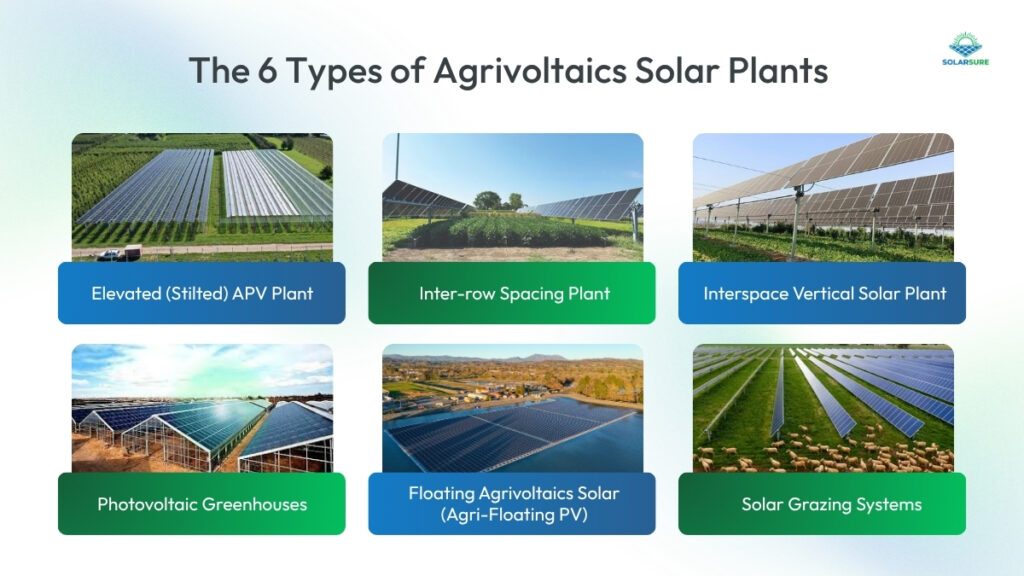
Type 1: Elevated (Stilted) APV Plant
What is an Elevated Agrivoltaics System?
In the elevated solar plant, the panels stand on tall pillars, about 7 feet above the ground. Because they are so high, your tractors and machines can drive easily under them. You do not lose any space for your crops. It is like having a tall roof over your farm that generates power.
How Do Elevated Panels Protect Your Crops?
The high panels act like a big umbrella for your plants. They protect your crops from very heavy rain and falling hail. They also keep the plants cool during the hot summer.
A pilot project in Madhya Pradesh proves this works in Indian conditions. Farmers used 12-foot RCC columns fitted with bifacial solar panels. Green gram (Moong) and wheat grew successfully under and between the panel rows.
Why Do Bifacial Panels Generate More Electricity?
These systems use “double-sided” panels that catch sunlight from the top and the bottom. This helps them make 10% more electricity than normal panels.
The plants below also help the solar panels. As plants grow, they release a little moisture into the air. This moisture cools the panels down. Cool panels work better and produce even more energy for your farm.
Type 2: Inter-row Spacing Plant
What is an Inter-row Spacing Agrivoltaics Solar Plant?
Inter-row spacing in agrivoltaics plants involves installing ground-level solar panels with deliberately wide gaps between each row. Farmers cultivate crops inside these gaps by using land that would otherwise sit idle between panel rows. The panels sit at a fixed tilt angle that allows adequate sunlight to reach the crops in the gaps.
Research from the Central Arid Zone Research Institute in Jodhpur tested multiple gap configurations. Designs include one-row panels with 10 foot gaps, two-row panels with 20-foot gaps, and three-row panels with 30-foot gaps. Wider gaps allow more light and better access for manual farming operations.
This system is perfect for farmers who do most of their work by hand. Since the panels are close to the ground, they are much cheaper to install. It is a great first step if you want to try solar farming without spending too much money.
Type 3: Interspace Vertical Solar Plant
What is a Vertical Solar System?
In a vertical solar system, solar panels do not tilt or face toward the sky. Instead, they stand straight up in long lines. These panels take up very little space on the ground. This leaves plenty of open space for farmers to grow crops.
Vertical panels work particularly well in regions where morning and evening sunlight is strong. They capture low-angle sunlight from the east in the morning and from the west in the evening. This east-west orientation spreads electricity generation more evenly across the day rather than peaking sharply at midday.
The vertical design also reduces shading on the crops between rows during midday hours. This makes vertical agrivoltaics systems well-suited to crops that need full sun during peak afternoon hours. Grain crops and certain vegetables adapt well to this light distribution pattern.
Type 4: Photovoltaic Greenhouses
What is a Photovoltaic Greenhouse Solar?
Photovoltaic greenhouses integrate solar panels replaces some part of the roof structure or side walls of an agricultural greenhouse. These panels let filtered sunlight reach the plants below. The same structure that keeps your crops safe also makes free power for your farm.
Many Indian farmers already have lightweight polyhouse structures for vegetable and flower cultivation. They can add solar panels to these existing frames with just a few small changes. This is a great way to start making extra money without stopping your current farming work.
The panels act like a cooling shade during the hot summer. The filtered light inside a solar greenhouse reduces heat stress during summer and protects crops from excessive radiation. Plants inside these structures often grow more uniformly than those in open fields. Shade-tolerant crops like leafy vegetables, medicinal herbs, mushrooms, and floriculture crops perform especially well in this environment.
Type 5: Floating Agrivoltaics Solar (Agri-Floating PV)
Floating solar systems put solar panels on top of your farm ponds or water tanks. This lets you save your land for crops while using the water surface to make power.
What is a Floating Solar System?
These panels float on the water you use for farming. You can put them on irrigation ponds or storage tanks. This way, you do not use any extra land to set up your solar plant. Your fields stay completely free for farming.
Water below the panels keeps them cooler than panels mounted over land. This cooler operating temperature improves panel efficiency and extends the working life of the solar plant. At the same time, the panels shade a large portion of the water surface and reduce evaporation from the pond.
Type 6: Solar Grazing Systems
Solar grazing is a smart way to raise animals and make electricity on the same land. It works best for farmers who keep sheep or goats.
What is a Solar Grazing System?
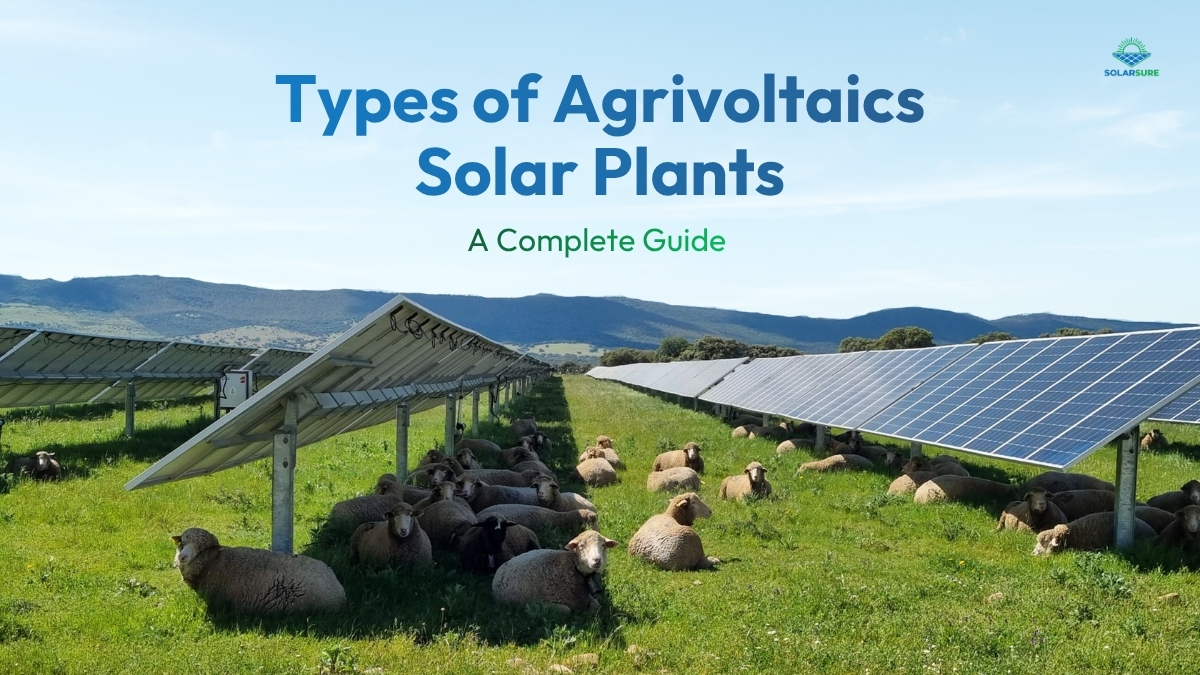
In this system, we fix solar panels high enough so animals can walk under them. Sheep are perfect for this because they are small and fit easily under the panels. The animals eat the grass that grows naturally in the shade of the solar plant.
Solar grazing systems design the space under elevated solar panels specifically for livestock grazing. Sheep and goats are the most commonly grazed animals in these systems because their compact size suits the panel height well. The animals graze on grass and ground-level vegetation that naturally grows under the shaded panel area.
Sheep and other small livestock provide a practical benefit by keeping grass short under the panels. Usually, workers have to cut the grass under solar panels so it does not grow too tall. This costs a lot of money. When you let sheep graze there, they eat the grass for free. This saves you money on maintenance and keeps the area clean.
The solar panels act like a big shed. The panels provide shade and weather protection to the animals. During hot summers, shaded panels create a cooler resting area that reduces heat stress on the livestock. The combination of solar electricity revenue, reduced maintenance costs, and animal farming income makes solar grazing systems financially attractive for pastoral farmers.
Quick Comparison of All Types of Agrivoltaics Solar Plants
| Type | Best Use Case | Farm Size | Cost Level |
| Elevated APV | Crops and mechanised farming | Large | High |
| Inter-row Spacing | Crops in panel gaps | Small to Medium | Low to Medium |
| Interspace Vertical | Grain and vegetable crops | Medium to Large | Medium |
| PV Greenhouse | Protected cultivation | Small to Medium | Low (retrofit) |
| Floating APV | Farms with water bodies | Any | Medium to High |
| Solar Grazing | Livestock and pasture | Large | Medium |
Best Crops for Agrivoltaics Systems
In agrivoltaics, the shade-tolerant crops consistently deliver the best results under solar panels. Choosing the right crop protects both your harvest and your energy income.
Highly Recommended Crops
Green gram, mungbean, mothbean, cluster bean, aloe vera, lemongrass, ashwagandha, radish, carrots, sweet potatoes, cumin, coriander, ginger, chilli, cabbage, and onion.
Crop Height Rule
Crops shorter than 50 centimetres suit most in an agrivoltaics solar plant. Taller crops can cast shade back onto the panels and reduce electricity output.
Research shows that wheat grains grown under agrivoltaic panels are approximately 25% heavier than those grown in open fields. Even crops that show a 15% yield reduction under panels can deliver better quality production that brings premium market prices.
Key Benefits of Agrivoltaics Solar Plants
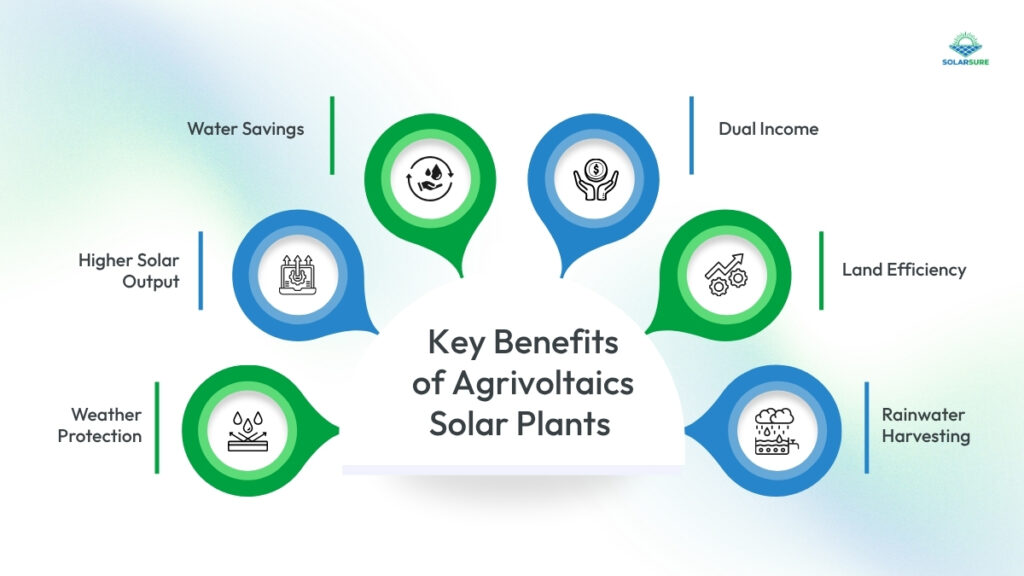
Water Savings
Agrivoltaic systems help farmers reduce soil water loss by 17 to 25%. This means crops stay moist for a longer time and need less watering. Also, floating solar systems reduce water evaporation from ponds by providing shade.
Higher Solar Output
Plants under the solar panels release moisture into the air, which naturally cools the solar panels. Cooler panels work better and can produce up to 10% more electricity compared to panels under direct heat.
Weather Protection
Solar structures act like a shield. They protect crops from heavy rain, hail, storms, and extreme heat. This reduces crop damage and lowers the risk for farmers.
Dual Income
Farmers earn from both crop sales and electricity sold to the power grid. The electricity income provides a stable and guaranteed revenue stream throughout the year. If livestock grazing is added, farmers can earn a third income as well and reduce maintenance costs.
Land Efficiency
Agrivoltaics improves overall land use efficiency by 60 to 70%. Farmers generate significantly more value from the same piece of land compared to single-use agriculture or standalone solar farms.
Rainwater Harvesting
Agrivoltaics systems collect rainwater from the top surface of solar panels. Farmers design channels to direct this water into storage tanks or directly to crop irrigation lines.
Challenges in an Agrivoltaics Solar Plant
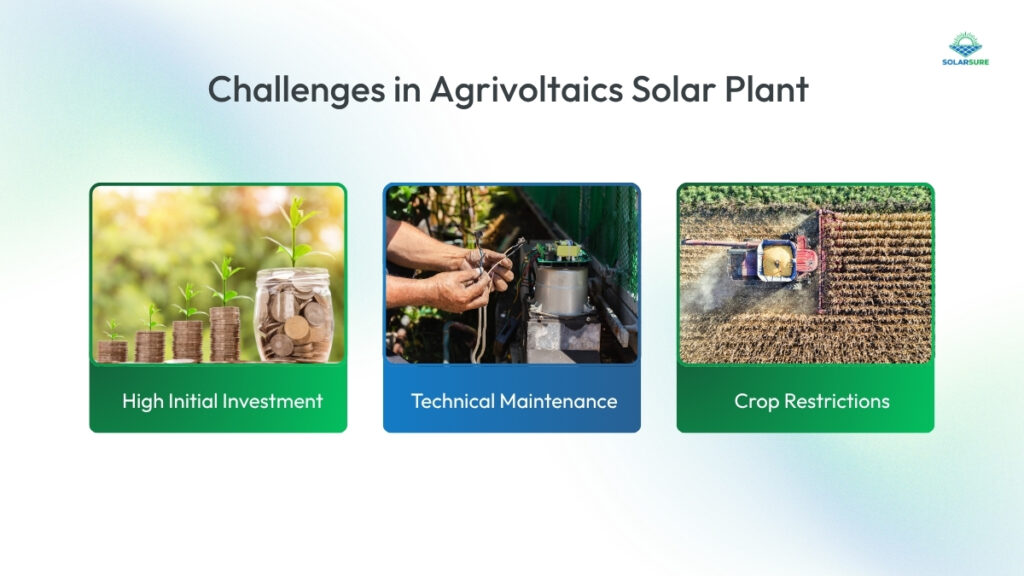
High Initial Investment
Elevated structures, bifacial panels, cables, and grid connection infrastructure cost significantly more than a conventional farming setup. Government subsidies and agricultural loans are essential to make agrivoltaics financially accessible for most farmers. Overall, the cost of a solar plant is a high investment for a farmer.
Technical Maintenance
Maintaining a solar PV system requires trained technicians beyond regular farming skills. Panels, inverters, and wiring need periodic inspection and servicing by an expert solar EPC partner or individual. Farmers must budget for long-term technical support contracts as part of their total operating cost.
Crop Restrictions
Panels limit the variety of crops that farmers can grow profitably on the same land. Sunlight-intensive crops, like sunflowers or sugarcane, do not perform well under partial shade. Careful crop planning and rotation across seasons is essential to maintain consistent agricultural output.
Which Type of Agrivoltaics Solar Plant is Right for You?
No single solar system fits every farmer. A smallholder in Rajasthan growing cumin has different needs than a commercial wheat farmer in Madhya Pradesh or a livestock farmer in Maharashtra. The right type of agrivoltaics solar plant depends on five things: your land size, existing infrastructure, available budget, preferred crops, and local water conditions.
Schedule a free consultation if you want to know more about agrivoltaics solar or are looking for an expert solar EPC partner.