Many companies claim to use renewable energy, but most factories, offices, malls, hospitals, and commercial buildings still receive electricity from the same common power grid. The grid’s electricity doesn’t come from solar only. It is a mix of coal power, hydro, wind, and solar. This mixing, a business cannot physically prove that the electricity running its machines came from a solar plant. Here, the renewable energy certificates fill the gap and work as proof that the electricity they are using comes from clean energy.
A Renewable Energy Certificate (REC) is an official, verifiable proof that renewable electricity was generated and added to the power grid. It allows a business to claim renewable energy usage even when the physical electricity at its facility comes from the conventional grid supply. A Renewable Energy Certificate (REC) is not considered as electricity. It is proof that renewable electricity was generated somewhere and added to the grid.
In this guide, we will explain everything about RECs, how they work in India, and why they matter for businesses.
What is a Renewable Energy Certificate (REC)?
A Renewable Energy Certificate is a tradable certificate that serves as proof that 1 megawatt-hour (MWh) of electricity was generated from a renewable energy source and added to the power grid. It allows businesses and individuals to claim the environmental benefits of renewable energy, even if they aren’t directly connected to a renewable energy source.
When a solar power plant generates electricity, it creates two outcomes at the same time. The plant sends electricity into the grid and produces an environmental benefit because the power does not come from coal or diesel. The system converts that environmental benefit into an REC.
The REC does not represent electricity. The REC represents the environmental value of clean energy generation.
All electricity mixes inside the grid, so consumers cannot identify the origin of the electricity entering their facilities. The REC provides a traceable accounting tool that assigns ownership of the clean energy benefit.
Each REC carries verifiable project information. The certificate includes the renewable technology type, project location, plant capacity, and generation date. Auditors can verify this information. So, a company that claims renewable energy usage through RECs makes a supported and auditable claim.
Why RECs Exist?
Electricity networks operate as shared systems. Many sources supply electricity to the same grid, and every consumer draws electricity from that network. Coal plants, hydro stations, wind farms, and solar plants all supply power to the same system. Once electricity enters the grid, no one can separate it.
Because of this, a factory cannot prove that the electricity powering its machines came from solar energy. RECs solve this problem. The system separates the environmental attribute from the electricity.
The grid continues to deliver electricity to consumers, while the REC transfers the environmental ownership through a certificate. This process separates the electricity from its environmental benefits.
A company located in a city without solar installations can still claim renewable electricity consumption after purchasing RECs. Many leased commercial buildings and data centres use this method because tenants do not control rooftops or land.
How Renewable Energy Certificates Work in India? (Step-by-Step Process Explained)
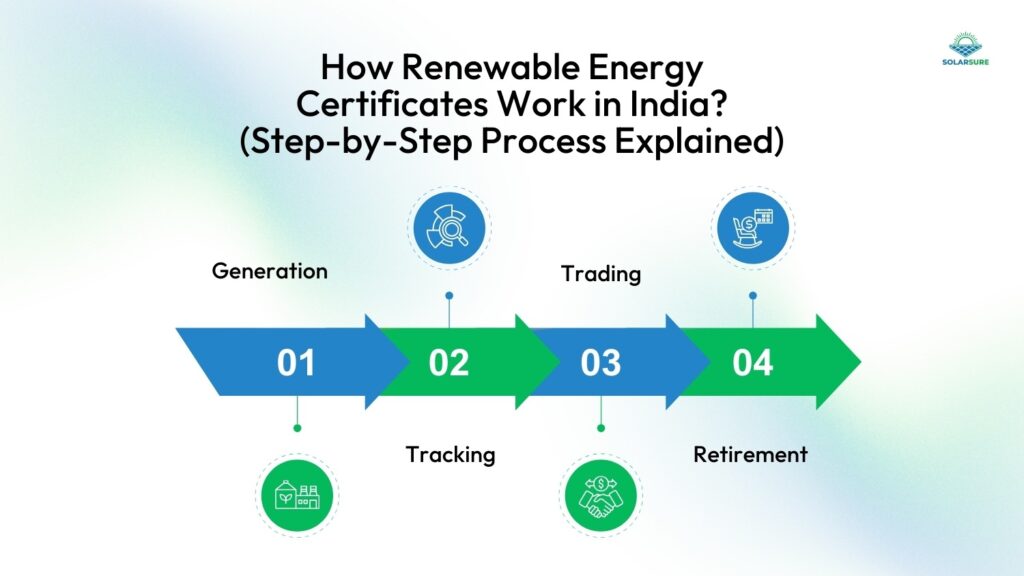
Generation
A renewable power plant, such as a solar project, produces electricity and injects it into the grid through an approved meter. The metering system records the exact amount of electricity exported to the grid. After verification, the system issues one Renewable Energy Certificate for every one thousand units of electricity generated.
Each certificate carries specific project information so regulators and auditors can trace it. A typical REC includes:
- The state and grid where the plant is located
- The renewable technology used, such as solar or wind
- The date and month of generation, often called the generation vintage
- The installed capacity of the project
- A unique identification number is assigned to that certificate
- This stage matters because the REC originates only after electricity generation. A project cannot create certificates without producing renewable power.
Tracking
After generation, the authorities register the REC in an official tracking system. In India, the approved REC mechanism records ownership and monitors the movement of the certificate from seller to buyer.
The registry performs several critical roles
- It verifies the generation data submitted by the project
- It assigns ownership to the generator
- It records every transfer of the certificate
- It prevents duplication or false claims
Tracking ensures market credibility. Without tracking, two companies could claim the same renewable electricity. The registry prevents this situation and maintains audit validity for sustainability reporting.
Trading
The solar project owner can sell the REC independently. The project may already sell power to a utility or supply it to the grid, yet the environmental attribute remains available for sale.
Buyers include:
- Large industries
- Data centers
- IT companies
- Commercial buildings
- Utilities meeting government targets
Companies purchase RECs because the installation of solar is not always feasible. Land limitations, leased premises, night operations, or capital constraints often make RECs the most practical option.
Retirement
After purchase, the buyer submits the certificate for retirement in the registry. Retirement permanently cancels the REC.
The retirement process performs two important functions
- It allows the buyer to claim renewable energy consumption legally
- It ensures no other entity can reuse or resell the same certificate
Once retired, the REC disappears from circulation. This step prevents double claiming and maintains credibility in environmental reporting and compliance audits.
Types of Renewable Energy Certificates
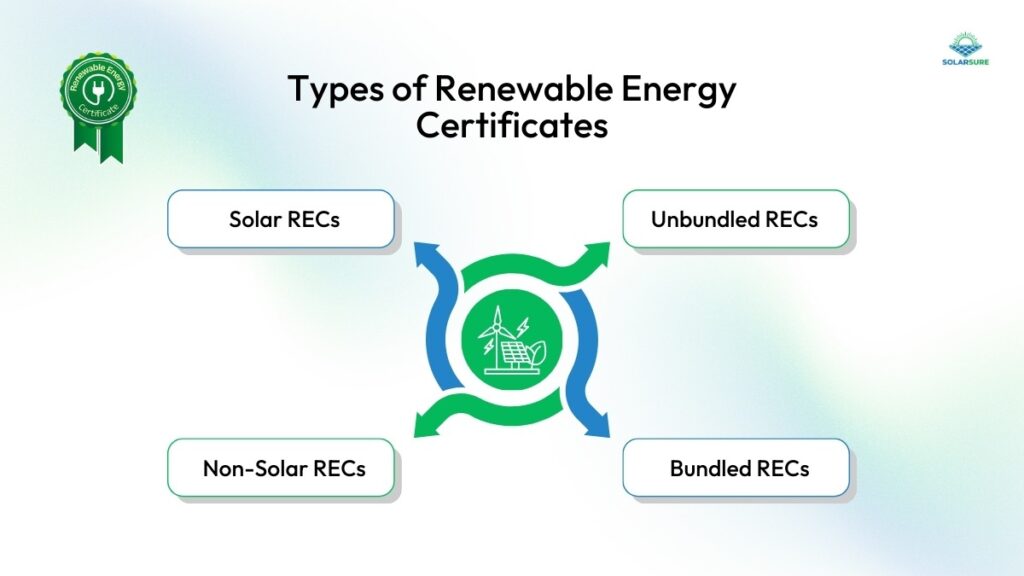
Solar RECs
Solar RECs originate specifically from solar power plants. Some regulatory frameworks require solar specific renewable consumption. Because of this requirement, solar RECs often carry higher compliance importance in certain situations.
Industries that must meet solar specific targets prefer these certificates because they directly support solar generation.
Non-Solar RECs
Non-solar RECs are generated from wind, small hydropower, biomass, or other eligible renewable sources. Wind RECs are the most commonly traded non-solar certificates globally. In India, they form a large portion of the overall REC market.
Bundled RECs
In bundled transactions, the buyer purchases electricity and the REC together from the same renewable generator. The buyer receives a renewable electricity supply and a legal environmental claim at the same time.
Open access solar power agreements often include bundled RECs because the consumer directly sources electricity from a renewable project.
Unbundled RECs
In unbundled transactions, the buyer purchases only the certificate while continuing to draw electricity from the local grid. The buyer does not change electricity supplier, but still owns the renewable attribute.
This structure represents the most common REC transaction because companies can meet renewable commitments without modifying existing power arrangements.
Benefits of Renewable Energy Certificates
Benefits of RECs For Solar Owners
RECs play a direct role in improving the financial performance of a solar project. A solar plant earns money primarily by selling electricity at a fixed tariff or agreed contract rate. Usually, the electricity tariffs in many projects remain relatively low, especially for large grid-connected plants. In such cases, REC income becomes an additional earning source that strengthens project economics.
When a solar developer receives revenue from RECs, the project gains a second stream of income that exists independently of electricity sales. This additional income improves the project’s overall return on investment because the plant now earns from both the power it produces and the environmental value it creates. As a result, the capital invested in the project recovers faster and the payback period reduces.
RECs become important for projects where the tariff alone cannot justify the investment. Some developers proceed with projects because the expected REC revenue makes the project financially viable. Many grid-connected solar plants depend on REC earnings to stabilise cash flow and support loan repayment to improve long-term profitability.
Benefits of RECs For Businesses
Many businesses want to use renewable energy but face practical constraints. Some facilities operate in rented buildings, some lack sufficient rooftop space, and others consume most of their electricity at night when solar generation is not available. Installing solar in every facility often becomes technically or financially impractical.
RECs provide a workable solution in such situations. A business can purchase RECs and legally demonstrate that it supports renewable electricity generation. This allows companies to meet sustainability commitments and participate in environmental reporting programs. Organisations that publish ESG or sustainability reports can show verified renewable energy consumption through REC retirement records.
Auditors and certification bodies accept RECs as proof of renewable electricity usage, which helps companies during compliance verification and environmental assessments. This also supports procurement requirements because large corporate buyers increasingly expect suppliers to demonstrate responsible energy sourcing.
Export oriented manufacturers especially benefit from RECs. International customers often review environmental performance across their supply chains before awarding contracts. When a manufacturer provides REC-based documentation, it shows that production relies on renewable electricity in accounting terms. This helps companies maintain market access and remain competitive in environmentally sensitive industries.
Benefits of Renewable Energy Certificates For Utilities & Government
RECs also serve an important policy function in the electricity sector. Governments set renewable energy consumption targets for utilities and certain large electricity consumers. However, not every consumer can install solar or purchase renewable power directly. The REC system allows these entities to meet their renewable purchase requirements without disrupting operations.
By creating a market for renewable attributes, RECs generate financial demand for clean energy generation. Renewable projects receive additional value for the environmental benefit they create, which encourages developers to build more solar and wind capacity. Over time, this supports national renewable energy expansion goals.
The REC mechanism also offers flexibility in compliance. Instead of forcing every consumer to construct renewable plants, regulators allow obligated entities to support renewable generation indirectly through certificate purchases. This approach balances grid reliability, industrial activity, and environmental policy.
In practice, the REC framework connects renewable energy producers and electricity consumers through a structured market. Generators receive economic support, consumers gain compliance and reporting capability, and policymakers promote clean energy growth across the power system.
Why Renewable Energy Certificates Matter for Businesses
Many businesses cannot install solar because operations or property ownership restrict installation. Factories that operate continuously consume significant electricity at night when solar generation stops. Commercial tenants do not own rooftops. Multi-location companies cannot install solar at every facility. So, there are many reasons that businesses cannot install solar.
RECs provide a practical solution for all of those businesses. They can purchase certificates and meet sustainability commitments, satisfy client procurement requirements, and participate in environmental reporting programs.
Export-oriented manufacturers increasingly need proof of renewable sourcing because international buyers evaluate supplier environmental performance. RECs allow these companies to demonstrate renewable electricity usage without building solar plants at every location.
Are Renewable Energy Certificates and Carbon Credits the Same?
No, RECs and carbon credits are not the same.
The renewable energy certificate represents renewable electricity generation. The carbon credits represent avoided or reduced greenhouse gas emissions.
Companies use RECs for renewable electricity claims in energy reporting. Companies use carbon credits for carbon neutrality and emission offsetting. A company that declares renewable electricity consumption uses RECs. A company that declares carbon neutrality uses carbon offsets.
When a Solar Owner Should Sell RECs or Retain Them?
Selling RECs generates direct financial income. Retaining RECs allows a company to claim renewable energy consumption in sustainability disclosures.
Manufacturing companies that export products or publish environmental reports often benefit from retaining RECs. Companies that prioritise financial return often sell RECs.
After selling RECs, the seller cannot claim renewable electricity usage because the seller transfers environmental ownership to the buyer.
Bottom Line
Renewable Energy Certificates have become the first practical step for many businesses entering renewable energy. Installing solar across every facility is not always possible due to issues, such as ownership, capital cost, operational timing, or space limitations.
RECs solve this immediately. A company can continue using its existing electricity connection and still make a verified renewable energy claim. RECs allow companies to start their clean energy journey today instead of waiting for infrastructure changes tomorrow. So, if you are unsure whether your organisation should purchase RECs, retain them, or combine them with open-access or rooftop solar, a proper assessment is important. You can book a free consultation with Solarsure to clarify any doubts and understand the right strategy for your business.