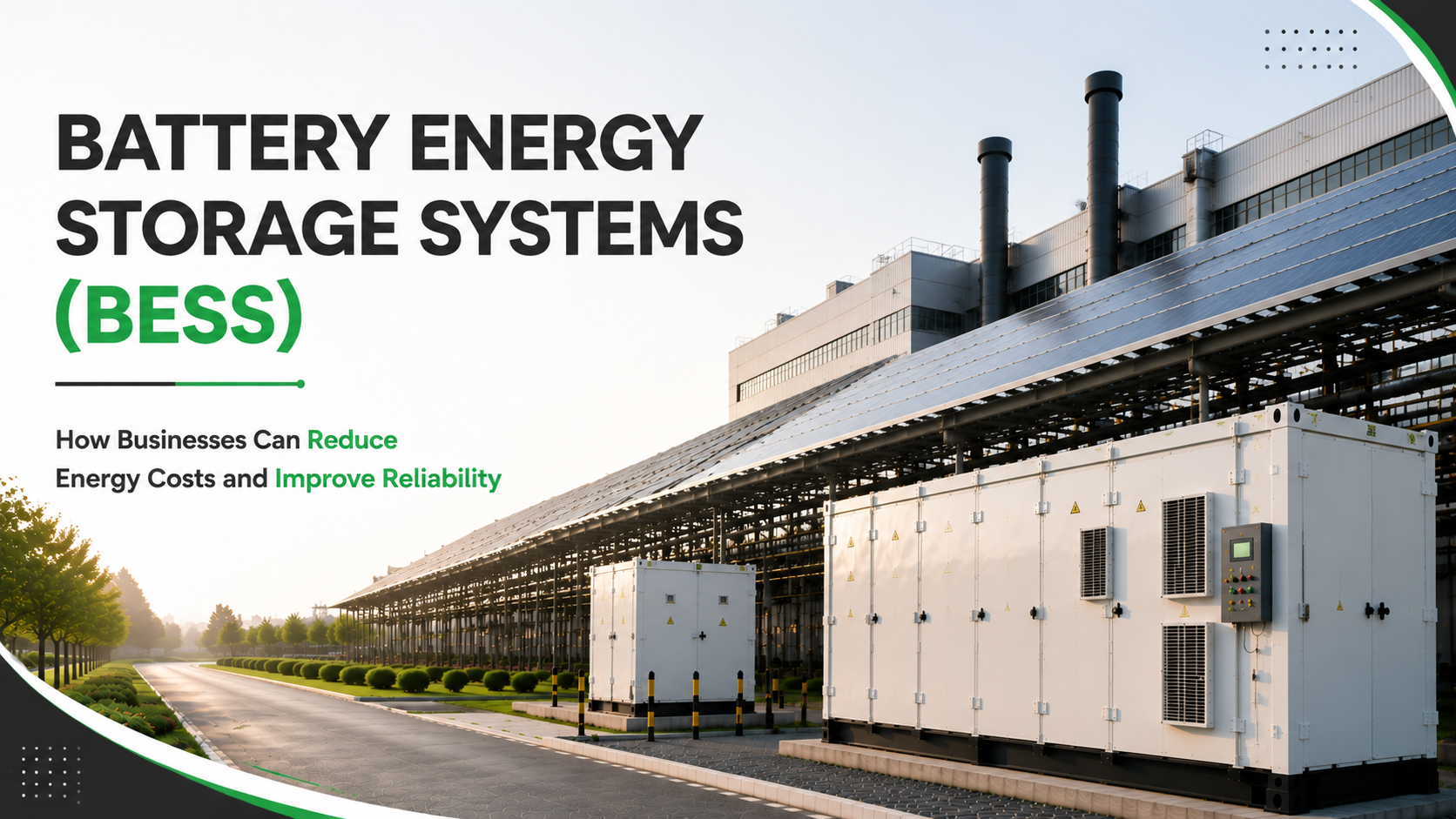
Battery Energy Storage Systems (BESS) are transforming how businesses manage electricity costs and power reliability. As energy prices continue increasing, companies need smarter solutions for long-term stability. Moreover, unexpected power disruptions can reduce productivity and affect critical business operations. Consequently, many organizations now invest in BESS to improve energy resilience and lower operating expenses.
Battery Energy Storage Systems (BESS) store electricity during low-demand periods for later use. Furthermore, these systems help businesses reduce peak demand charges and maximize renewable energy utilization. They also provide backup power, ensuring operations continue during unexpected grid interruptions. As a result, organizations achieve greater energy independence while improving overall operational efficiency.
Manufacturing plants, commercial buildings, hospitals, data centers, and logistics facilities increasingly adopt BESS solutions. Therefore, battery storage has become a strategic investment for businesses seeking cost savings and reliability. This guide explains how Battery Energy Storage Systems (BESS) work, their key benefits, common applications, investment considerations, and future industry trends. By the end, you will understand whether BESS fits your organization’s long-term energy strategy.
What Is a Battery Energy Storage System (BESS)?
A Battery Energy Storage System (BESS) is an advanced energy solution storing electricity for future consumption. Businesses charge batteries using grid electricity or renewable energy sources like solar. Later, stored electricity supplies power whenever demand rises or outages occur.
Moreover, BESS automatically balances electricity supply and demand through intelligent energy management systems. This approach improves energy efficiency while reducing dependence on expensive peak-hour electricity. Consequently, businesses gain greater control over operating costs and overall energy performance.
For example, an automotive manufacturing plant can store electricity during off-peak hours. The facility then uses stored energy during expensive production shifts every afternoon. As a result, electricity expenses decrease without affecting manufacturing output or productivity.
Similarly, hospitals increasingly combine BESS with rooftop solar installations for reliable operations. During unexpected grid failures, stored electricity immediately powers critical medical equipment continuously. Therefore, patient care remains uninterrupted while essential healthcare services continue safely.
Data centers also depend on BESS to strengthen operational reliability and business continuity. Instead of waiting for diesel generators, stored electricity supplies instant backup power. Consequently, servers remain operational while preventing costly downtime and data losses.
Modern BESS combines batteries, power conversion equipment, energy management software, and advanced safety systems. Together, these technologies deliver reliable electricity whenever businesses require uninterrupted power. Therefore, Battery Energy Storage Systems have become essential for modern commercial and industrial energy management.
Key Functions of Battery Energy Storage Systems
- Store electricity during low-demand or lower-cost periods.
- Supply stored electricity during peak-demand or high-tariff periods.
- Provide immediate backup power during unexpected grid outages.
- Maximize renewable energy utilization through energy storage.
- Reduce peak demand charges using intelligent energy management.
- Improve grid stability by balancing electricity demand efficiently.
Why Businesses Need Battery Energy Storage Systems (BESS)
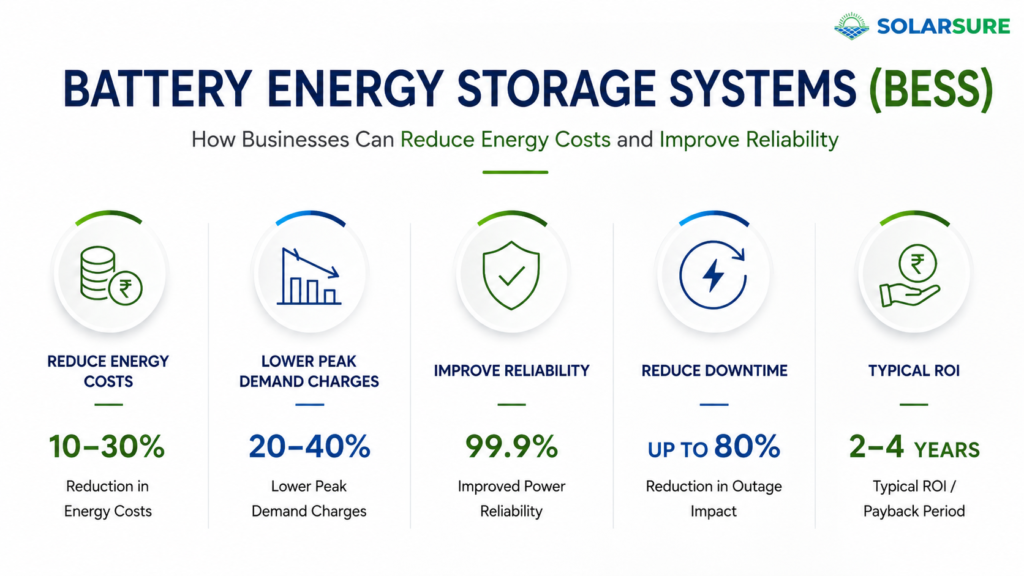
Businesses today face rising electricity prices, increasing demand charges, and frequent power disruptions. Consequently, managing energy costs has become a strategic business priority across industries. Traditional electricity procurement often cannot deliver predictable costs or reliable power.
Moreover, many organizations are adopting renewable energy to reduce operating expenses and emissions. However, solar power generates electricity only during daylight hours. Therefore, Battery Energy Storage Systems (BESS) store excess electricity for use whenever demand increases or grid supply becomes unreliable.
For example, a textile manufacturing plant can store surplus solar energy during afternoon hours. Later, the facility uses stored electricity during evening production, reducing expensive grid consumption. Similarly, a commercial building can power essential systems during outages, ensuring business operations continue without interruptions.
In addition, BESS reduces dependence on diesel generators while improving overall energy efficiency. As a result, businesses lower electricity costs, strengthen energy reliability, and achieve long-term sustainability goals.
Key Business Challenges Solved by BESS
| Business Challenge | How BESS Helps |
| Rising electricity costs | Stores lower-cost electricity for later use. |
| High demand charges | Reduces peak-hour grid consumption. |
| Power outages | Provides instant backup electricity. |
| Excess solar generation | Stores renewable energy efficiently. |
| Diesel generator dependence | Delivers cleaner backup power. |
| Sustainability goals | Supports lower carbon emissions. |
How Does a Battery Energy Storage System (BESS) Work?
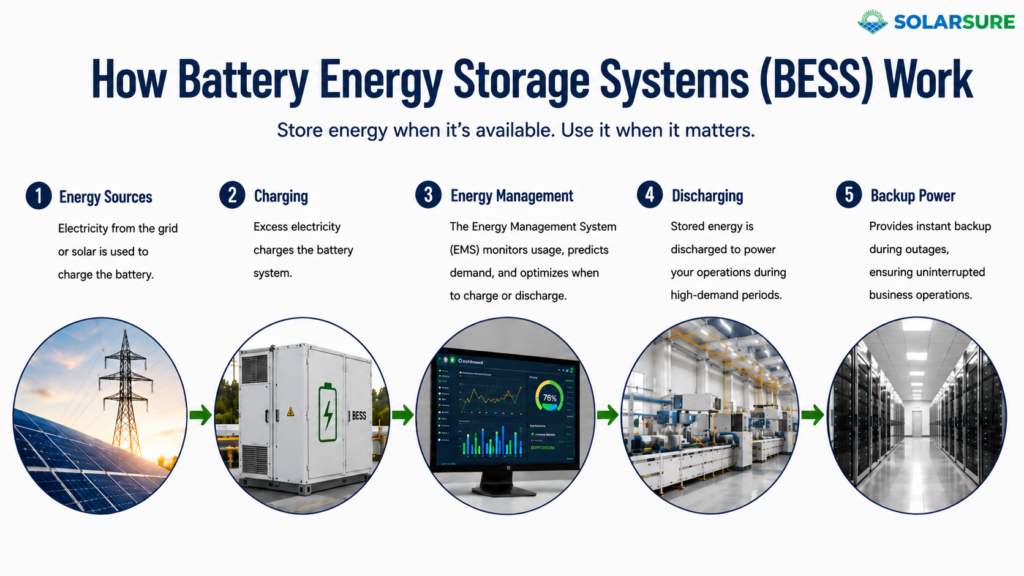
A Battery Energy Storage System (BESS) captures electricity when supply exceeds immediate demand. Businesses can charge batteries using grid electricity, rooftop solar, or other renewable sources. Later, the system releases stored electricity whenever energy demand increases or outages occur.
Moreover, an intelligent Energy Management System (EMS) continuously monitors electricity consumption and battery performance. It automatically decides when charging or discharging delivers maximum financial and operational benefits. Consequently, businesses reduce electricity costs without affecting daily operations.
For example, a food processing facility charges its batteries during low-tariff night time hours. During expensive daytime periods, stored electricity powers production equipment instead of grid electricity. As a result, the facility lowers peak demand charges and improves overall energy efficiency.
Similarly, an airport terminal stores excess solar electricity generated during sunny afternoon hours. Later, the battery supplies power for lighting and essential services after sunset. Therefore, renewable energy utilization increases while dependence on conventional grid electricity decreases.
How BESS Works in Simple Steps
- Electricity is generated from the grid or renewable energy sources.
- The battery stores surplus electricity for future business requirements.
- The Energy Management System monitors demand and battery conditions continuously.
- Stored electricity supplies power during peak demand or grid interruptions.
- The battery recharges whenever surplus electricity becomes available again.
Key Components of a Battery Energy Storage System (BESS)
A Battery Energy Storage System (BESS) combines several technologies working together efficiently. Each component plays an important role in storing, managing, and delivering electricity safely.
Battery Cells
Battery cells store electrical energy until businesses need additional power. Today, lithium-ion batteries dominate commercial and industrial BESS installations because they offer high efficiency, longer lifespans, and faster charging capabilities.
Battery Management System (BMS)
The Battery Management System continuously monitors battery temperature, voltage, and overall health. Moreover, it protects batteries from overheating, overcharging, and excessive discharge. Consequently, battery performance remains reliable while extending the system’s operational lifespan.
Power Conversion System (PCS)
The Power Conversion System converts direct current (DC) into alternating current (AC). Similarly, it converts AC electricity back into DC during battery charging. This process allows stored electricity to power standard business equipment safely.
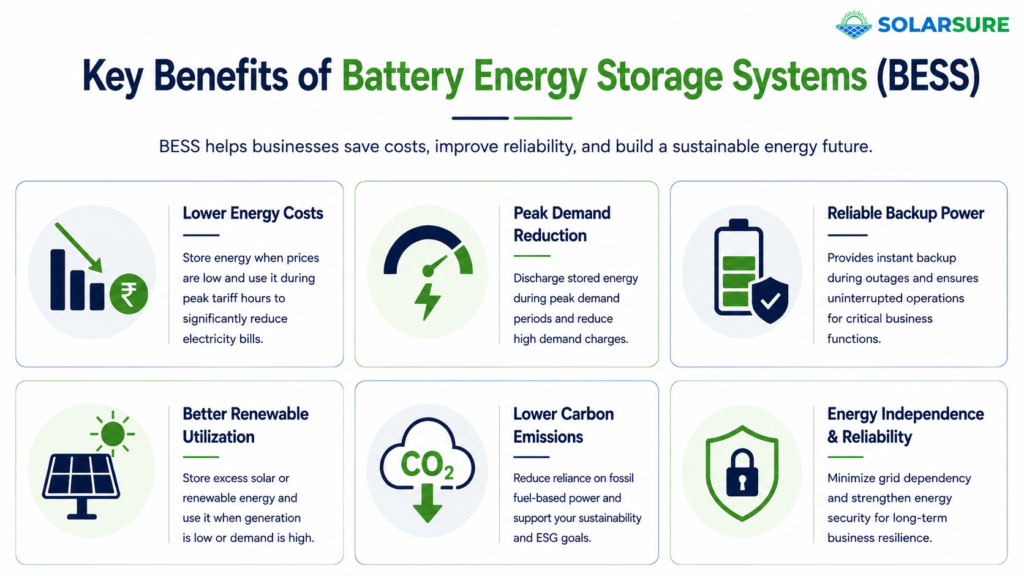
Lower Electricity Costs
BESS stores electricity when tariffs are lower and supplies it during expensive peak hours. Consequently, businesses reduce demand charges and improve overall energy cost efficiency. For instance, an automotive components manufacturer can charge its battery system during off-peak hours and use the stored energy to support high-energy production lines during peak tariff periods, helping control electricity costs without disrupting operations.
Improved Power Reliability
Unexpected power interruptions can disrupt production, damage sensitive equipment, and increase operational losses. BESS provides instant backup power until the grid stabilizes or an alternative power source becomes available. This capability is particularly valuable for electronics manufacturing facilities, where even a brief outage can interrupt automated production lines and affect product quality.
Better Renewable Energy Utilization
Solar power generation often exceeds immediate electricity demand during the day. Instead of exporting or wasting surplus electricity, BESS stores the excess energy for later use, allowing businesses to maximize renewable energy consumption and reduce dependence on grid electricity. For example, a textile manufacturing facility can use surplus solar energy generated during daytime operations to power evening production shifts after solar generation declines.
Lower Carbon Emissions
Battery storage enables businesses to increase renewable energy usage while reducing reliance on diesel generators and fossil fuel-based grid electricity. As a result, organizations can lower greenhouse gas emissions and strengthen their sustainability performance. This approach is increasingly being adopted by food processing facilities, where stored renewable energy supports critical refrigeration and processing operations while reducing diesel generator usage during power outages.
Greater Energy Independence
BESS gives businesses greater control over electricity consumption and procurement strategies. Consequently, organizations become less vulnerable to tariff increases and unexpected grid disruptions. This flexibility improves long-term operational resilience and financial planning.
Benefits of Battery Energy Storage Systems
| Benefit | Business Impact |
| Lower electricity costs | Reduces energy bills and demand charges. |
| Reliable backup power | Minimizes downtime during outages. |
| Better solar utilization | Stores excess renewable electricity efficiently. |
| Lower carbon emissions | Supports ESG and sustainability goals. |
| Greater energy independence | Reduces dependence on grid electricity. |
Common Applications of Battery Energy Storage Systems (BESS)
Battery Energy Storage Systems (BESS) support various commercial and industrial applications. Moreover, businesses use battery storage to improve efficiency, reliability, and energy cost management.
Peak Demand Management
Many businesses experience high electricity demand during specific operating hours. BESS supplies stored electricity during these periods, reducing expensive peak demand charges. This approach is widely used in steel and metal manufacturing plants, where battery storage supports energy-intensive equipment during peak production hours while helping control monthly electricity costs.
Renewable Energy Integration
Businesses increasingly combine BESS with rooftop or open-access solar installations. The system stores excess solar generation for later consumption after sunset, maximizing renewable energy utilization and reducing grid dependence. Many commercial campuses and industrial facilities with large rooftop solar installations use battery storage to extend the use of solar energy into evening operations when electricity demand remains high.
Backup Power
Unexpected power outages can interrupt critical business operations and reduce productivity. BESS delivers instant backup electricity until the primary power source returns. Data centers, hospitals, and pharmaceutical manufacturing facilities increasingly deploy battery energy storage to maintain uninterrupted operations and protect critical equipment during grid disturbances.
Electric Vehicle (EV) Charging
Businesses installing EV charging stations often experience higher electricity demand. BESS supplies stored electricity during charging peaks, reducing pressure on grid connections. Fleet operators and logistics companies transitioning to electric delivery vehicles are using battery storage to support fast-charging infrastructure while minimizing peak demand charges and avoiding costly grid upgrades.
Grid Support Services
Some businesses participate in grid balancing programs using battery storage systems. During periods of high electricity demand, stored energy can be dispatched to support grid stability while creating additional revenue opportunities where market regulations permit. Large commercial and industrial consumers in several electricity markets are already using battery storage to provide grid support services while improving the overall utilization of their energy assets.
Common Business Applications of BESS
| Application | Primary Benefit |
| Peak demand management | Reduces demand charges. |
| Solar energy storage | Maximizes renewable energy usage. |
| Backup power | Ensures uninterrupted operations. |
| EV charging support | Manages charging demand efficiently. |
| Grid support services | Improves grid reliability and flexibility. |
Challenges and Considerations Before Investing in BESS
Battery Energy Storage Systems (BESS) offer significant business advantages over conventional energy solutions. However, careful planning remains essential before making any investment decision. Evaluating technical, financial, and operational factors helps businesses maximize long-term project value.
Initial Investment
BESS requires a higher upfront investment than traditional backup power systems. Therefore, businesses should evaluate lifecycle savings instead of initial project costs alone. A detailed financial analysis helps estimate long-term returns more accurately. For example, an automotive manufacturer with high peak demand can often recover its investment faster because lower electricity bills gradually offset installation costs through consistent operational savings.
Choosing the Right System Size
Selecting the correct battery capacity directly affects project performance and financial returns. An undersized system may fail during peak electricity demand periods, while an oversized system increases costs without delivering proportional business benefits. For instance, a textile mill operating three production shifts typically requires greater storage capacity, whereas a commercial office with daytime operations needs comparatively smaller battery storage.
Battery Lifespan and Performance
Battery performance gradually declines after repeated charging and discharging cycles over time. Consequently, businesses should evaluate battery lifespan, warranty coverage, and replacement requirements carefully. For example, Amazon deploys battery storage across several logistics facilities and prioritizes long-life battery technologies to ensure dependable performance while reducing long-term maintenance requirements.
Safety and Regulatory Compliance
Modern BESS includes advanced monitoring, cooling, and fire protection technologies for safety. However, proper installation and regulatory compliance remain equally important for reliable operations. Businesses should always follow national electrical standards and manufacturer safety guidelines. For instance, hospitals install battery storage with multiple safety systems to protect critical healthcare operations and ensure uninterrupted power during emergencies.
Integration with Existing Infrastructure
BESS should integrate smoothly with existing electrical infrastructure and renewable energy systems. Therefore, businesses must assess available space, grid connections, and equipment compatibility beforehand. For example, a beverage manufacturing plant expanding its rooftop solar system may require electrical upgrades, and proper planning ensures seamless battery integration while maximizing renewable energy utilization.
Future Business Expansion
Business energy requirements often increase as production capacity and operations expand. Consequently, organizations should choose scalable BESS solutions supporting future electricity demand efficiently.
For instance, a logistics company may initially install a smaller battery system. Later, additional battery modules can support warehouse expansion and electric vehicle charging.
Carefully evaluating these considerations helps businesses reduce implementation risks and maximize long-term returns. Moreover, partnering with experienced BESS providers ensures reliable performance throughout the system’s operational lifespan.
Government Policies and Incentives Supporting BESS in India
The Indian government actively promotes Battery Energy Storage Systems (BESS) through several clean energy initiatives. Moreover, these policies encourage businesses to adopt battery storage alongside renewable energy projects.
National Framework for Energy Storage
The Ministry of Power (MoP) recognizes battery storage as a key enabler of India’s energy transition. Therefore, several national policies encourage large-scale BESS deployment across commercial and industrial sectors. These initiatives improve grid reliability while supporting higher renewable energy adoption. Businesses can explore the latest policy updates through the Ministry of Power.
For example, Adani Green Energy has integrated battery energy storage into selected renewable energy projects to improve power reliability and support grid stability. Consequently, businesses and utilities can access cleaner electricity with greater supply consistency
Viability Gap Funding (VGF)
The Government of India has approved Viability Gap Funding (VGF) for selected Battery Energy Storage System projects. This initiative encourages private investment while improving project affordability. Businesses can track recent announcements through the Ministry of Power and Solar Energy Corporation of India (SECI).
Renewable Energy Integration
Battery storage plays a vital role in supporting India’s renewable energy expansion. Solar and wind generation naturally fluctuate throughout different periods each day. Therefore, BESS stores excess renewable electricity and supplies power whenever generation decreases. The Ministry of New and Renewable Energy (MNRE) continues to promote energy storage as a key enabler of renewable energy integration. For example, NTPC Renewable Energy Limited is developing large-scale Battery Energy Storage System (BESS) projects alongside renewable energy initiatives to improve grid reliability and support higher renewable energy penetration. Consequently, these projects demonstrate how battery storage enables more consistent renewable power while reducing dependence on conventional generation.
📖 Further Reading: MNRE – Renewable Energy Initiatives
State-Level Policies
Several Indian states continue introducing policies supporting renewable energy and battery storage adoption. However, incentives, regulations, and project approvals vary across different states. Therefore, businesses should review applicable state policies before making investment decisions. Electricity regulations and technical standards are also available through the Central Electricity Authority (CEA).
Companies such as Tata Steel evaluate state-specific renewable energy policies and regulatory frameworks while expanding clean energy projects across their manufacturing facilities. This approach helps identify locations offering better renewable energy opportunities, favourable project economics, and long-term energy cost savings.
📚 Related Reading : Open Access Solar for MSMEs and Factories: A Complete Guide (India 2026)
Expert Recommendation
Before investing in BESS, businesses should review both central and state government policies carefully. Consulting experienced energy experts also helps identify available incentives and regulatory requirements. Consequently, organizations can maximize project value while ensuring long-term regulatory compliance.
Latest Trends in Battery Energy Storage Systems (BESS)
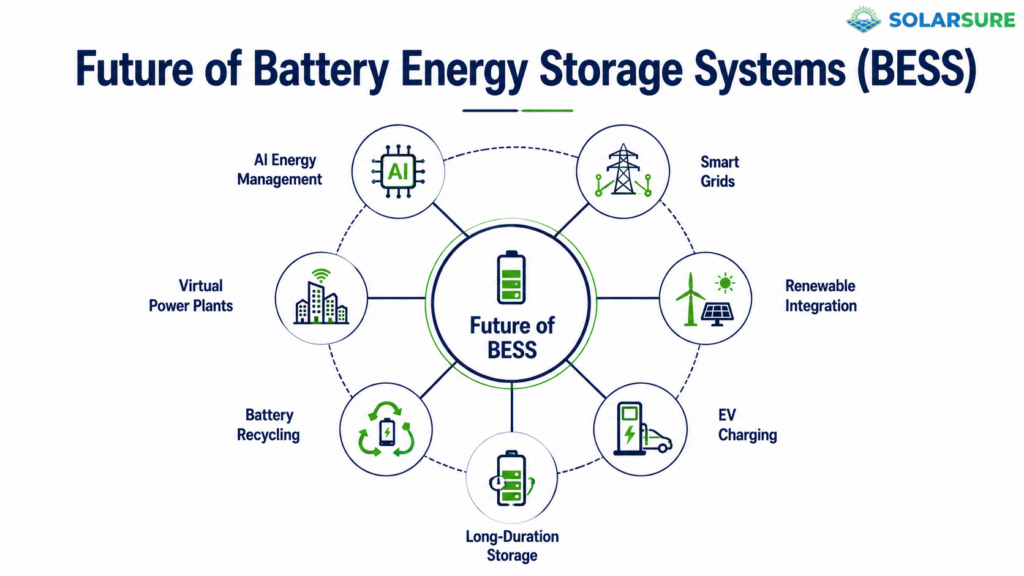
Battery storage technology continues evolving as businesses demand smarter energy solutions. Moreover, innovation is making BESS more efficient, scalable, and cost-effective across industries.
Artificial Intelligence Is Improving Energy Management
Artificial Intelligence (AI) is transforming Battery Energy Storage Systems (BESS) by enabling smarter energy management. AI analyses electricity consumption patterns and automatically optimizes battery charging and discharging schedules. Schneider Electric integrates AI-powered energy management with battery storage solutions to help industrial facilities optimize energy use, lower peak demand, and reduce electricity costs. Consequently, businesses improve overall system efficiency while maximizing the value of their energy assets.
Renewable Energy and BESS Are Growing Together
Businesses increasingly combine battery storage with rooftop and open-access solar projects. This combination stores excess renewable electricity for use after solar generation declines, allowing organizations to maximize clean energy utilization while reducing grid dependence. For example, Amazon has deployed battery energy storage alongside renewable energy systems at several logistics facilities to optimize renewable power usage and improve energy reliability across its operations.
Long-Duration Energy Storage Is Expanding
Businesses increasingly require battery systems that provide longer backup durations and greater operational flexibility. Therefore, manufacturers continue developing advanced battery technologies with higher energy capacities to support larger commercial and industrial applications. For example, the Melbourne Renewable Energy Hub in Australia is deploying one of the world’s largest battery energy storage projects to deliver long-duration energy storage and improve grid reliability. Such projects demonstrate how larger battery systems can support critical infrastructure during extended grid disruptions.
Battery Recycling Is Becoming a Priority
As battery adoption increases, recycling and resource recovery are becoming essential parts of the battery value chain. Recovering valuable materials reduces environmental impacts while supporting a circular economy, enabling businesses to strengthen sustainability initiatives throughout the battery lifecycle. Companies such as Redwood Materials recover lithium, nickel, and cobalt from used batteries, reducing dependence on virgin raw materials while improving resource efficiency.
Growing Investments in Battery Storage
Governments and private organizations continue investing heavily in battery storage projects worldwide. Moreover, increasing investments accelerate technological improvements and reduce deployment costs. As a result, Battery Energy Storage Systems are becoming more accessible for commercial and industrial businesses.
These emerging trends highlight BESS as a long-term investment rather than a temporary energy solution. Therefore, businesses adopting battery storage today will remain better prepared for future energy challenges and sustainability goals.
Best Practices for Successful BESS Deployment
Installing a Battery Energy Storage System (BESS) requires careful planning and informed decision-making. Following proven best practices helps businesses maximize performance, safety, and long-term financial returns.
Conduct a Detailed Energy Assessment
Every business has unique electricity consumption patterns and operational requirements. Therefore, analyzing historical energy data before selecting a battery storage system is essential. This assessment helps determine the appropriate battery capacity and expected financial savings. Companies such as JSW Steel conduct detailed energy planning while expanding renewable energy across their manufacturing operations, ensuring energy infrastructure aligns with production demand and long-term cost objectives.
Choose the Right Battery Technology
Different battery technologies offer varying performance, lifespan, and maintenance requirements. Therefore, businesses should compare available options before making investment decisions. Selecting suitable technology improves long-term reliability and overall project value. Companies such as Fluence deploy lithium-ion battery technology across commercial and utility-scale energy storage projects because of its high efficiency, long cycle life, and fast response capabilities.
Work with Experienced Solution Providers
BESS installation involves engineering design, electrical integration, and ongoing system monitoring. Therefore, businesses should partner with experienced solution providers with proven industry expertise. Professional implementation reduces project risks while improving operational performance. Companies such as Hitachi Energy design and integrate battery energy storage solutions for industrial facilities and utilities, helping ensure reliable system performance from commissioning through long-term operation.
Monitor System Performance Regularly
Continuous monitoring helps businesses maintain optimal battery performance throughout the system’s lifecycle. Regular inspections identify potential issues before they affect operations or reliability. Consequently, preventive maintenance reduces downtime and extends battery lifespan.
Plan for Future Expansion
Business electricity demand often grows alongside production, facility expansion, and electrification initiatives. Therefore, organizations should choose a scalable Battery Energy Storage System (BESS) that can support future energy requirements without requiring major infrastructure modifications.
Companies such as DHL are expanding warehouse operations while increasing the adoption of electric delivery vehicles and on-site renewable energy. As a result, scalable energy infrastructure, including battery storage, enables these facilities to accommodate higher electricity demand without disrupting existing operations.
Planning for future expansion helps businesses maximize BESS performance while minimizing operational risks. Moreover, a scalable system improves long-term financial returns, supports future renewable energy integration, and strengthens overall energy resilience.
Frequently Asked Questions (FAQs)
Q. What is a Battery Energy Storage System (BESS)?
A Battery Energy Storage System (BESS) stores electricity for future business use. It charges using grid electricity or renewable energy sources like solar. Later, the system supplies stored electricity during peak demand, power outages, or high-tariff periods.
Q. How does a Battery Energy Storage System (BESS) reduce electricity costs?
BESS stores electricity when tariffs remain lower and supplies power during expensive periods. Consequently, businesses reduce peak demand charges and minimize reliance on costly grid electricity. This strategy improves energy efficiency while lowering overall operating expenses.
Q. Can a Battery Energy Storage System (BESS) work without solar panels?
Yes, BESS can operate without solar panels. Businesses can charge batteries using grid electricity during off-peak hours. Later, stored electricity supplies power during peak demand or unexpected power outages.
Q. Which businesses benefit the most from Battery Energy Storage Systems (BESS)?
Manufacturing plants, hospitals, commercial buildings, data centers, logistics facilities, and shopping malls benefit significantly from BESS. These businesses often experience high electricity consumption, making battery storage valuable for reducing costs and improving operational reliability.
Q. How long does a Battery Energy Storage System (BESS) last?
The lifespan depends on battery technology, operating conditions, and charging cycles. Most commercial battery systems provide reliable performance for many years with proper maintenance. Following manufacturer recommendations helps maximize battery lifespan and operational efficiency.
Q.Is a Battery Energy Storage System (BESS) better than diesel generators?
BESS and diesel generators serve different business requirements. BESS provides instant backup power, reduces electricity costs, and supports renewable energy integration. Diesel generators remain useful during extended power outages requiring continuous electricity for longer durations.
Q. What factors affect the cost of a Battery Energy Storage System (BESS)?
Several factors influence BESS costs, including battery capacity, technology, power rating, installation complexity, and integration requirements. Therefore, businesses should evaluate long-term savings instead of considering only the initial investment.
Q.Is a Battery Energy Storage System (BESS) safe for commercial and industrial facilities?
Yes, modern BESS includes advanced monitoring, cooling, and fire protection technologies. However, proper installation, regular maintenance, and compliance with safety standards remain essential for reliable long-term operation.
Q. How do businesses choose the right Battery Energy Storage System (BESS)?
Businesses should evaluate electricity consumption, peak demand, backup requirements, and future expansion plans. Consulting experienced energy experts also helps determine the appropriate battery capacity and system configuration.
Q.Is investing in a Battery Energy Storage System (BESS) worthwhile?
Businesses with high electricity consumption often achieve significant long-term benefits through BESS. Lower energy costs, improved power reliability, and greater renewable energy utilization strengthen both financial performance and sustainability objectives.
Bottom Line
Battery Energy Storage Systems (BESS) are changing how businesses manage electricity costs and operational reliability. Moreover, these systems help organizations reduce peak demand charges while improving renewable energy utilization. Companies such as Adani Green Energy are expanding battery energy storage alongside renewable energy projects to improve grid reliability and support the growing adoption of clean energy. As a result, businesses gain greater control over energy expenses and long-term operational resilience.
However, successful BESS deployment requires careful planning and informed investment decisions. Choosing the right system size, battery technology, and implementation partner directly affects project performance. Therefore, businesses should evaluate operational requirements, financial goals, and future expansion before investing.
As energy markets continue evolving, BESS will become increasingly important for commercial and industrial businesses. Organizations investing today can strengthen energy security, improve sustainability, and build long-term competitive advantages. Consequently, battery storage represents a strategic investment for building future-ready business operations.