
Massive Budget Expansion
The total funding allocated to the scheme is expected to increase significantly. The budget may rise from ₹34,422 crore to nearly ₹50,000 crore, which means an increase of about 45%.
This expansion reflects strong farmer demand for solar pumps and decentralised solar plants. Higher funding allows the government to expand installations across more states and districts.
A Dedicated Agrivoltaics Program
One of the most important additions in PM KUSUM 2.0 is a 10 GW Agrivoltaic component. In agrivoltaics, solar panels generate electricity above ground while crops continue to grow underneath. The same land now produces both food and energy.
Agrivoltaics allows farmers to generate solar electricity while continuing crop cultivation on the same land. This approach solves a key concern about solar expansion in the fertile agricultural areas as well.
In the previous scheme, it is considered that large solar parks compete with farmland for land availability. Agrivoltaics removes this conflict by enabling dual land use. Now, farmers can generate electricity without compromising traditional farming practices on their lands.
Bank Guarantees for EPC Companies
Solar installations under government schemes are typically executed by EPC (Engineering, Procurement and Construction) companies. In earlier projects, some farmers faced issues with poor installation quality or a lack of maintenance support.
PM KUSUM 2.0 introduces mandatory bank guarantees for EPC contractors. These guarantees ensure that contractors remain accountable for plant performance. If a solar system underperforms or fails prematurely, financial safeguards are available to protect farmers.
Integration with the Agri Infrastructure Fund
Another major upgrade involves linking decentralised solar projects with the Agriculture Infrastructure Fund. This fund provides concessional loans for agricultural infrastructure projects.
By integrating solar projects with this financing framework, farmers may gain easier access to affordable credit. This change is expected to reduce the financial barriers that slowed adoption during the first phase.
A Unified National Application Portal
Earlier phases of the scheme relied on separate state-level portals for application submission. This created inconsistencies in documentation requirements and approval timelines. PM KUSUM 2.0 proposes a single national application portal.
A centralised portal simplifies the application process and improves transparency. Farmers can apply and track their application status more easily through a single platform.
Battery Storage Integration
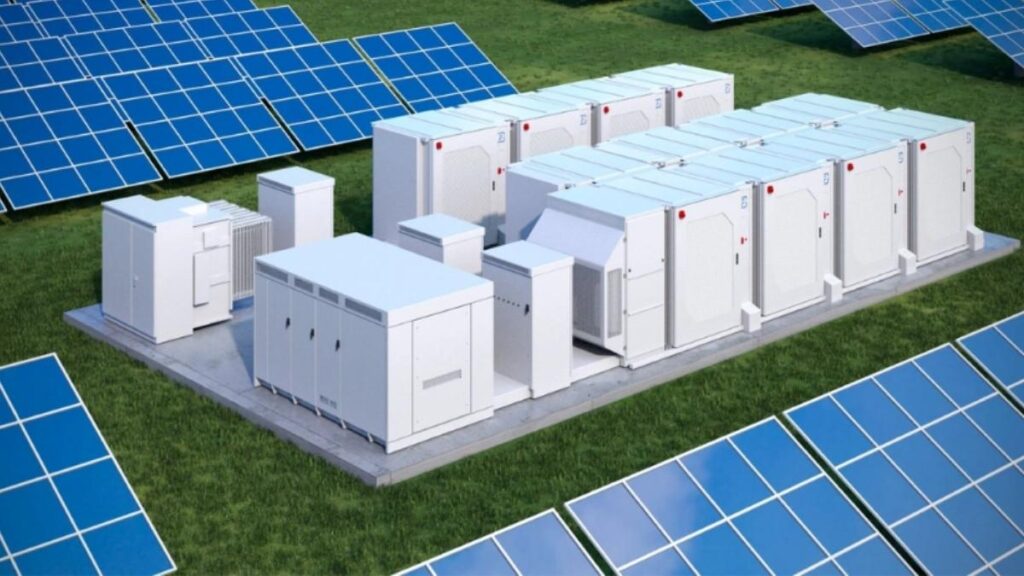
Solar electricity generation fluctuates depending on sunlight availability. Cloud cover and evening hours reduce solar output. PM KUSUM 2.0 introduces battery storage systems to address this limitation.
Battery storage allows excess electricity generated during peak sunlight hours to be stored and used later. This improves grid stability and ensures a more reliable electricity supply.
Tariff Rate Adjustments
Another proposal under discussion involves increasing tariffs for solar electricity sold under long-term Power Purchase Agreements. Current tariffs in many projects are around ₹3.25 per unit in Madhya Pradesh (which varies state-wise). Discussions suggest the possibility of increasing this to approximately ₹3.50 per unit.
Even a small tariff increase significantly improves project economics when applied over a 25-year agreement. It also reflects a potential gain in the income of a farmer adopting solar compared to the farmers who adopted in the PM KUSUM phase 1.
What is Agrivoltaics?
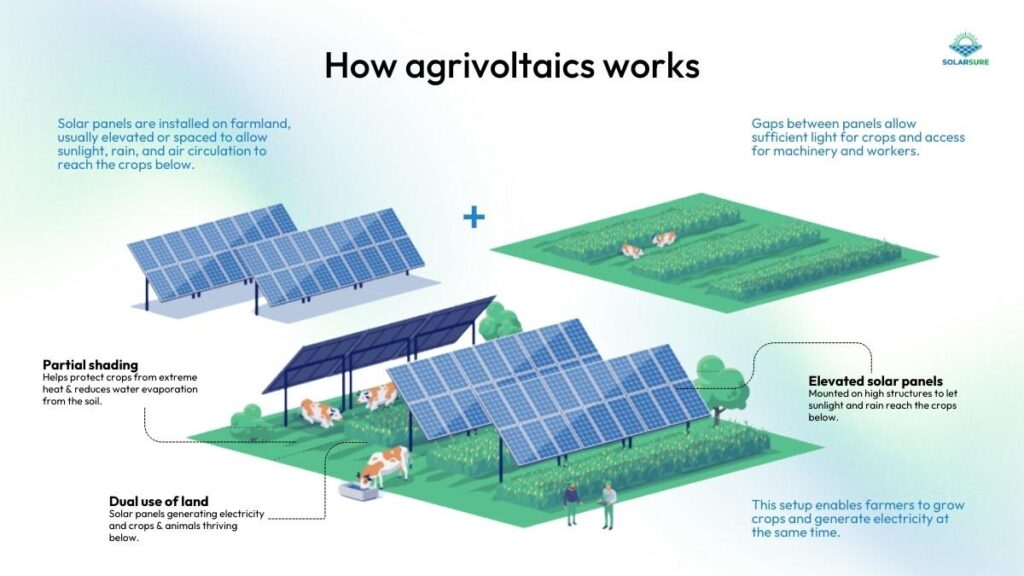
Agrivoltaics is emerging as one of the most promising innovations in agricultural energy systems. In an agrivoltaic setup, solar panels are mounted on elevated structures, typically 10 to 16 feet above ground level. This height allows machinery, such as tractors, harvesters, ploughs, and other farming equipment to operate freely beneath the panels.
The land continues to support agricultural cultivation while simultaneously producing electricity.
Understand the Income Potential using Agrivoltaics
Agrivoltaics significantly improves farm income potential. Traditional land leasing models for solar projects typically generate around ₹60,000 per acre annually. Agrivoltaic systems can increase this income to over ₹1 lakh per acre per year.
Consider a practical example involving a 1 MW solar plant installed on approximately five acres of land.
- Solar electricity sales could generate ₹80,000 to ₹1,00,000 per month.
- Farming activities under the panels may add ₹50,000 to ₹70,000 annually.
- In addition, replacing diesel irrigation can save approximately ₹6,000 to ₹7,000 per month.
These combined benefits significantly improve the economic stability of farm households.
Financial Assistance and Subsidy Breakdown Under PM KUSUM 2.0
PM KUSUM includes a structured subsidy framework to make solar adoption financially feasible for farmers. The scheme generally follows a 30-30-40 subsidy model.
Under this structure, the central government provides 30% as Central Financial Assistance. State governments contribute another 30% as a subsidy. The remaining 40% represents the farmer’s share.
Farmers do not necessarily need to arrange this entire amount themselves. Banks can finance up to 30% of the project cost under Priority Sector Lending. This means a farmer may need to arrange only 10% of the total cost as an upfront payment.
Special provisions exist for hilly and north-eastern states such as Jammu and Kashmir, Himachal Pradesh, Uttarakhand, and states in the North East. In these regions, Central Financial Assistance increases to 50%, while state governments continue to provide 30% subsidy. As a result, the farmer’s contribution reduces to 20% of the project cost, making solar installations significantly more affordable.
Step-by-Step Application Guide Under PM KUSUM 2.0
Applying for PM KUSUM 2.0 requires careful preparation and accurate documentation. Here is the four-step guidance for you to apply under PM KUSUM 2.0:
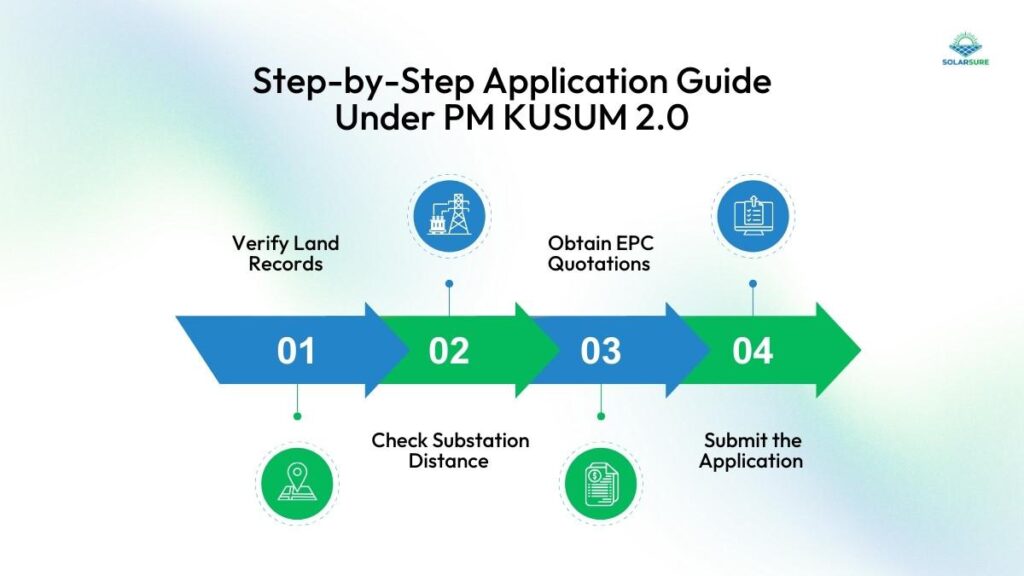
Step 1: Verify Land Records
The applicant must own the land where the solar installation will be located. The name on the Aadhaar card must match the name recorded in land ownership documents such as Khasra or Khatauni.
Mismatches between these records are among the most common reasons for application rejection. Farmers should correct any discrepancies at the local tehsil office before applying.
Step 2: Check Substation Distance
For decentralised solar plants under Component A or solarised pumps under Component C, the land should ideally be located within five kilometres of a power substation.
Moreover, farmers should visit their local DISCOM office to confirm grid connectivity capacity before submitting their application.
Step 3: Obtain EPC Quotations
Applicants should collect two to three quotations from registered EPC companies before submitting their application.
Each quotation should clearly mention the solar panel manufacturer, inverter capacity, and all balance-of-system components.
Comparing multiple quotations helps farmers evaluate installation quality and avoid cost surprises. Also, it is recommended to learn more about solar EPC and how it works. Better knowledge can help you in making the right decision in order to choose a qualified and reliable solar EPC.
Step 4: Submit the Application
Applications can be submitted online through official government portals or offline through the nearest agriculture department office.
Applicants should keep copies of all submitted documents and acknowledgements. These records help track the progress of the application during verification and approval stages.
Current Challenges in PM KUSUM 1.0 and What PM KUSUM 2.0 Aims to Fix
The first phase of PM KUSUM revealed several structural challenges. Here are some major challenges in PM KUSUM 1.0:
Financing Barriers
Many farmers faced difficulties obtaining bank loans despite renewable energy being classified under priority sector lending.
Banks often demanded high collateral before approving loans. As a result, a large number of decentralised solar projects remained stalled.
Under PM KUSUM 2.0, linking the scheme with concessional financing mechanisms is expected to ease this problem.
Payment Delays from DISCOMs
Electricity distribution companies sometimes delay payments for electricity purchased from solar projects. These delays affect project cash flows and discourage farmer participation in clean energy campaigns.
Improving payment reliability remains a key objective in the new phase of the scheme. The government is actively resolving the payment clearance delay issues from DISCOMs.
Domestic Content Requirement Challenges
PM KUSUM 2.0 includes Domestic Content Requirement rules, which mandate the use of locally manufactured solar cells and modules. While the policy supports domestic manufacturing, it has also created supply constraints in some cases.
Lack of Maintenance Support
Solar pumps installed in remote rural areas sometimes face maintenance challenges due to the absence of nearby service technicians. PM KUSUM 2.0 includes provisions to strengthen after-sales service networks.
Bottom Line
PM KUSUM 2.0 represents a significant step toward integrating renewable energy with Indian agriculture. The scheme reduces irrigation energy costs while creating new income opportunities through solar electricity generation.
Farmers who prepare early can benefit significantly from this opportunity. As India expands its renewable energy capacity, programs like PM KUSUM demonstrate how agriculture and clean energy can grow together.
If you want to understand whether your land is suitable for a PM KUSUM solar project, book a free consultation with our solar experts to explore the best options for your farm.